



by Bruce Keith, on October 21, 2026
Trust is earned before a FSBO seller is ready to hire you. Marketing yourself as a FSBO expert means showing that you understand the selling process, offer practical guidance, and respect the seller’s goals, even if they’re not ready for representation. Lead with useful information, not a pitch.
It’s natural to assume that sellers who choose to go it alone won’t want to hear from an agent. But specific, helpful advice can make you a resource rather than another sales message. Share clear answers to common selling questions, explain your perspective without pressure, and follow through consistently. Your credibility grows when your online presence reflects the professionalism of your conversations.
This guide explains how to build trust with FSBO sellers, create authentic content that supports your reputation, and make your online presence easier for potential clients to find. You’ll also learn how to attract leads with focused marketing and weigh your efforts against potential income. The goal is a repeatable approach that helps sellers see your value and moves you from first contact toward a meaningful conversation.
Key Takeaways
- Build credibility by offering practical guidance that respects FSBO sellers’ goals, rather than leading with a pitch.
- Use consistent, authentic content to show your expertise and give sellers a reason to keep engaging with you.
- Create a focused landing page and useful resource that turn seller interest into meaningful follow-up opportunities.
- Track marketing expenses alongside lead activity and potential income to make smarter decisions about where to invest.
- Make your online presence clear and professional so sellers can quickly understand your value and take the next step.
1. Building trust by helping FSBO sellers navigate the process
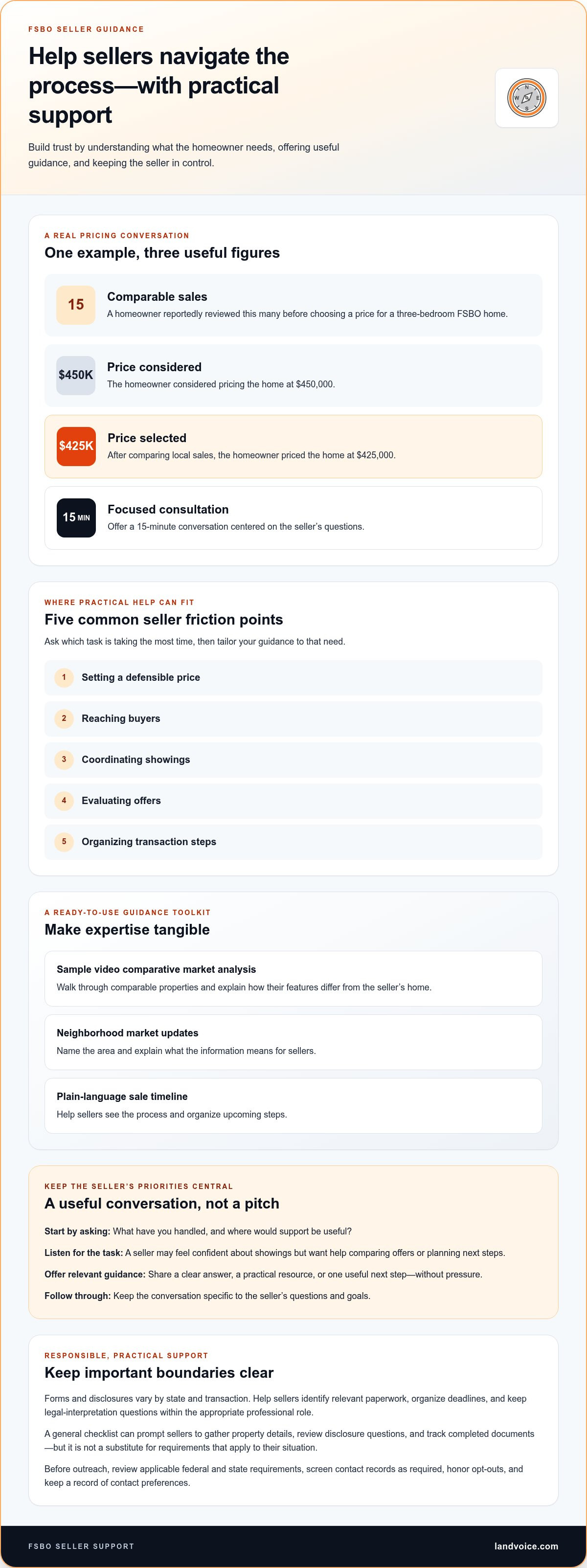
FSBO means “For Sale By Owner”: homeowners manage the sale themselves instead of listing through an agent. Your role is to make the process easier to understand, not pressure sellers to change their strategy. Start by asking what they’ve handled and where they want support. A seller may feel confident about showings but need help comparing offers or planning next steps. Respect their priorities and tailor your guidance to the task they identify.
Pricing is one useful opening. One homeowner reportedly compared 15 comparable sales before pricing a three-bedroom FSBO home at $425,000 instead of $450,000. Use examples like this to show how local sales can inform a pricing conversation. Offer a 15-minute consultation focused on the seller’s questions. Share articles that explain the selling process, then follow up with relevant information rather than a generic pitch.
To specialize in FSBO sellers, build a repeatable service approach around common needs: pricing perspective, property marketing, showing plans, buyer communication, and offer review. Keep a toolkit ready with a sample video comparative market analysis, neighborhood market updates, and a plain-language sale timeline. For example, a short video can walk through comparable properties and explain how their features differ from the seller’s home. Link a relevant FSBO seller resource when it supports that conversation.
Forms and disclosures vary by state and transaction. Help sellers identify the state-specific paperwork they may encounter, organize deadlines, and keep questions about legal interpretation within the appropriate professional role. A practical checklist can prompt sellers to gather property details, review disclosure questions, and track completed documents. Don’t present a general checklist as a substitute for the forms or requirements that apply to their situation.
How can you find and contact FSBO sellers while following telemarketing and do-not-call rules? Use legitimate FSBO listing sources, review applicable federal and state requirements before outreach, screen contact records as required, and honor opt-outs. Keep a record of contact preferences, and use a permitted channel if a seller has asked not to receive calls.
Prepare for objections before conversations. Write down common statements such as “I want to save on commission” or “I already have a plan,” then practice concise, respectful replies. Ask what outcome matters most and offer one useful next step without arguing. This turns objections into an opportunity to understand the seller’s priorities and have a more relevant conversation.
What services do FSBO sellers most often need help with? Start with common friction points: setting a defensible price, reaching buyers, coordinating showings, evaluating offers, and organizing transaction steps. Ask which task is taking the most time, then tailor your guidance to that need. Practical support makes your expertise clear while leaving sellers in control of their decisions.
2. Building trust through consistent, authentic content
Marketing yourself as a FSBO expert starts with content homeowners can use. A regular social media series can highlight home features and selling considerations throughout the week. For example, explain how natural light affects a room’s appeal and what buyers may notice during a showing. Focus on practical insight, not claims that every home sale follows the same formula.
Build a simple content rhythm you can maintain. Share a pricing explanation, a marketing tip, and an answer to a seller question you hear often. Use your own voice and plain language. If you post about listing photos, show how an uncluttered room helps viewers focus on its size and features. Don’t present a polished image as a promise of a particular sale result.
Authenticity also means respecting the seller’s perspective. An FSBO homeowner may value control over the process, so create content that helps them make informed decisions themselves. One post could compare the questions buyers ask at a showing with the details a seller can prepare in advance. Another could explain how to organize inquiries and follow-up. These examples demonstrate expertise without turning every post into a pitch.
How can you build credibility as a FSBO expert with reviews, case studies, and credentials? Ask past clients for honest reviews, then share them with permission without changing their meaning. Present case studies by describing the seller’s challenge, your specific contribution, and the outcome, while distinguishing your work from factors outside your control.
Make your credentials clear and relevant. State your professional qualifications accurately, describe your experience with sale-by-owner situations, and explain the guidance you provide. Don’t imply that a credential guarantees a successful closing. A concise profile can connect your background to a practical example, such as helping a seller assess a listing presentation or prepare for buyer questions.
Use comments and direct messages to turn content into a conversation. If a homeowner asks about photos, answer directly and offer a useful next step, such as reviewing the listing’s image order together. If you share a market update, name the area and explain what the information means for sellers. Specific, consistent answers help people see how you think and make your online presence more credible.
A strong approach to marketing yourself as a FSBO expert includes reviewing your posts regularly. Keep advice that starts meaningful conversations, refresh outdated examples, and remove content that no longer reflects your approach. A consistent voice across your profile, posts, and replies gives homeowners a clear sense of what working with you could feel like before they decide to start a conversation.
3. FSBO landing pages and lead magnets
A focused landing page gives FSBO homeowners a clear next step after they discover your advice. Build it around a specific seller problem, such as preparing for a showing or presenting a property online. Use a direct headline, a brief explanation of how you help, and a simple form. For example, invite visitors to request a home-sale checklist in exchange for their contact details.
Make the lead magnet useful on its own. A seller toolkit could include a showing-preparation checklist, a buyer inquiry log, and a guide to organizing property information. Add prompts about room condition, access, and follow-up. When a resource solves a real task, sellers have a concrete reason to engage. Avoid vague promises about getting a higher price or selling faster.
Connect each landing page to a defined audience and channel. A Facebook post can offer a guide to preparing for showings, while an Instagram post can point to advice on presenting rooms. LinkedIn content can focus on homeowners relocating for work. Local Facebook groups can help you reach people connected to the area, as long as your posts follow group rules and offer useful information.
What marketing channels work best for reaching FSBO homeowners? Use Facebook groups and neighborhood-focused social posts to connect with sellers and community members. Instagram geotags and relevant location hashtags can help people discover property content, while LinkedIn can reach people considering a work-related move.
Give visitors a reason to trust your page before they share their details. Include a short introduction to your real estate experience, explain what the resource covers, and show a sample page or checklist. For a video CMA, describe the comparable properties and explain how location, condition, and features affect the comparison. Make each explanation clear enough for sellers to use themselves.
Property visuals strengthen a page when they teach rather than distract. A short walkthrough video can show how lighting changes a room’s appearance and where a seller might simplify the presentation. Pair the video with a caption that identifies the practical takeaway. Avoid stock images that suggest a property or setting unlike the seller’s home.
Follow up in a way that matches the resource requested. If someone downloads a showing checklist, send a related tip about preparing for buyer questions. If they request a market update, explain which local sales informed the comparison. One FSBO seller reportedly found that 80% of viewers who received a property information packet asked for a second showing. Use that example as a reminder to make each resource specific, organized, and helpful to buyers.
Track which channels bring relevant conversations, not just clicks. Compare inquiries from Facebook, Instagram, LinkedIn, and your landing page by the questions sellers ask and the follow-up they welcome. Then refine the headline, resource, or next step to better match their needs.
4. FSBO marketing costs and potential income
Build a budget before launching real estate outreach. Separate recurring promotion from one-time content and property expenses. Track each expense alongside the conversations and consultations it supports.
Property marketing costs give you useful context when advising FSBO sellers. These are seller-side expenses, separate from your business’s marketing budget.
Help sellers compare each expense with its purpose. Photography can present rooms clearly, while a property website gives buyers one place to find details. A smartphone can capture photos and video without expensive equipment or a videographer. Encourage sellers to prioritize clear, useful presentation before adding optional promotion. Each action should support visibility, buyer interest, or a smoother showing process.
For your own marketing, define what counts as a qualified lead before spending. Record the source, contact date, follow-up, consultation, and outcome. Review the activity regularly. If social ads generate attention but few seller conversations, adjust the audience or message. If a toolkit mailer starts useful discussions, refine its content and keep tracking responses.
Then compare marketing investment with potential gross commission income. One example projects one $400,000 listing per month at a 3% commission, producing gross commission income of $12k monthly. The same example projects $144,000 per year annually. Treat those figures as gross income, not profit; business expenses and other costs affect what you keep.
Time belongs in the budget too. The example plan estimates daily outreach to new sellers takes less than 30 minutes, while weekly marketing tasks take less than three hours. It also estimates roughly 3-4 hours per week for the example’s prospecting and marketing effort. Use a calendar to protect focused work time and compare hours with meaningful conversations.
Tie your spending to a clear next action. Set a defined test period, note the audience and message, then assess the seller interest that follows. Confidence comes from knowing which efforts create productive conversations, not from spending more by default. Scale channels that fit your workflow, and revise those that consume time without advancing a real estate opportunity.
5. Making a strong first impression online
Your online presence may be a homeowner’s first impression of your real estate expertise. With 97% of homebuyers starting their search online, your digital footprint matters immensely when marketing yourself as a FSBO expert. Make your profile easy to understand: identify the sellers you help, describe your approach, and use a current, professional photo. A clear profile helps FSBO homeowners quickly see whether your guidance fits their needs.
For a property post, lead with strong visuals and a useful detail. FSBO sellers are advised to create social media posts featuring 5-10 listing photos. Select images that show the home’s layout, natural light, and distinctive features. A caption can explain how a renovated kitchen or flexible work area supports everyday living, rather than relying on broad claims about the property.
Instagram can showcase interiors, natural light, and design features. TikTok can carry a short, casual walkthrough that gives viewers a sense of a home’s rooms and flow. Film during the day, use available natural light, and tidy the home before recording. Simple preparation improves clarity without turning a practical property tour into an elaborate production.
Give each channel a specific purpose. An Instagram post might highlight staging choices, while a TikTok walkthrough can show how the living room connects to the kitchen. A LinkedIn post can explain a market point relevant to homeowners planning a move. Consistent visuals and clear commentary help attract attention while demonstrating how you think about selling.
Your agent profile should answer practical questions, too. State your real estate focus, explain how you support FSBO sellers, and make your contact details easy to find. A short post about organizing paperwork can show your process without promising legal advice. Another might outline questions sellers can consider before negotiating an offer. Keep the advice specific and accurate.
Review your online presence as a seller would. Open your profile on a phone, check that your latest posts match your stated focus, and remove outdated information. Make sure visitors can move from a property example to your contact details without searching. A polished first impression comes from clear positioning, relevant content, and a straightforward next step.
Turn this review into a practical action: check your profile, refresh one post, and make your FSBO expertise visible.
Landvoice: Expired Pro
Landvoice’s Expired Pro can support agents building a seller prospecting pipeline alongside their FSBO expertise. If you’re focused specifically on For Sale By Owner prospects, Landvoice’s FSBO Leads align directly with that audience. Expired Pro offers another seller lead source for outreach beyond FSBO listings. Choose the source that fits your prospecting strategy, then use the seller-focused content and follow-up approach in this article to guide each conversation. FRBO Leads and Pre-Foreclosure Leads can also support outreach to other types of potential sellers. Explore Landvoice’s lead options to find a next step that fits your prospecting efforts.
Turn Your Expertise Into Consistent Momentum
Trust grows through the experience sellers have with you over time. Make every interaction useful, respectful, and easy to follow. A clear next step matters, but so does listening when a homeowner needs space to decide. That steady approach helps your reputation develop beyond a single listing or conversation.
Keep refining how you show up. Notice which messages open meaningful conversations, where sellers need more guidance, and how your follow-up can serve them better. Then put what you learn into action. Marketing yourself as a FSBO expert is not a one-time campaign; it’s a professional practice strengthened with every thoughtful contact.
If you’re ready to support your prospecting with seller-focused tools, explore Landvoice’s options and choose a next step that fits your workflow.
Stay consistent, stay useful, and keep building trust. Your next strong seller relationship can begin with the next conversation.
Frequently Asked Questions
How should you pitch your services to FSBO sellers without sounding pushy?
Lead with permission and a useful observation, then let the seller decide whether to continue. For example, mention one specific point about their listing and ask whether they’d welcome a brief perspective. If they decline, thank them and respect their answer. Avoid criticizing their decision to sell independently or implying they can’t manage the process. A calm, seller-led conversation builds more trust than a rehearsed pitch.
What FSBO marketing materials and online content should an agent create?
Create resources that answer distinct seller questions, such as a showing-preparation checklist, an offer-comparison worksheet, and a sample explanation of local market activity. Keep each item easy to scan on a phone. Use a short video to demonstrate how you evaluate a listing description, then pair it with a clear written takeaway. Make sure examples are accurate, protect client privacy, and show your reasoning rather than promising a particular outcome.
What are the risks and legal rules when marketing to FSBO sellers?
Key risks include contacting someone through a restricted channel, ignoring an opt-out, misrepresenting your role, and sharing private listing details without permission. Before outreach, identify the contact method, check applicable do-not-call and telemarketing requirements, and document the seller’s preferences. Keep messages factual and honor requests to stop. Distinguish general real estate information from legal advice, and don’t use a seller’s private information in public marketing.
What local MLS, advertising, and real estate licensing rules apply to FSBO marketing?
Requirements depend on the state, local market, MLS rules, and your brokerage policies. Before advertising a property or discussing representation, clarify whether you have permission to use its photos, address, or listing details, and identify your role accurately. Review advertising disclosures, listing access, and MLS participation rules with your broker. Apply the requirements relevant to the specific activity rather than assuming every FSBO property can be promoted like a represented listing.
