



by Bruce Keith, on November 7, 2026
A client’s “no” is part of real estate, not a verdict on your ability. Learning how to not take real estate rejection personally starts with separating a prospect’s decision from your worth as a professional. Each refusal can help you understand what the client needs, refine your approach, or recognize that the fit isn’t right.
It’s normal to feel disappointed after investing time in a conversation or presentation. But one client’s timing, uncertainty, or priorities don’t define your potential. Treating rejection as part of the work can help you stay steady, keep reaching out, and prevent one setback from derailing your momentum.
This article will help you recognize your reactions to rejection, rebuild confidence, and learn from conversations that don’t move forward. You’ll also find practical ways to respond to objections, follow up thoughtfully, and focus your energy on clients whose needs align with what you offer.
Key Takeaways
- Notice your emotional response after a rejection before deciding what it means about your performance.
- Use thoughtful questions and active listening to understand what shaped a prospect’s decision.
- Look for patterns across conversations, then adjust your communication where you have control.
- Focus your effort on prospects whose goals and needs align with the way you work.
- Build a steady prospecting routine so one “no” doesn’t stop you from making the next contact.
1. Building confidence through overcoming rejection
Separate a client’s decision from your self-worth by evaluating the offer, timing, and fit instead of judging your character. If a prospect chooses another agent, it means their decision favored a different option. It doesn’t prove you lack skill or potential. Write down what happened, then identify one specific lesson. Learning how to not take real estate rejection personally starts with assessing the conversation, not your character.
Confidence grows through action, not through waiting until every conversation feels comfortable. One real estate professional received 87 rejections before closing his first deal. That example doesn’t make every setback easy, but it shows why a refusal shouldn’t define your career. Track the conversations you start, the questions you ask, and the adjustments you make. Those are skills you can strengthen with practice.
Build a personal connection by getting curious about the person behind the transaction. Ask what matters most in an agent, what would help them feel confident moving forward, or what motivates them to sell. Then listen without rushing to pitch. A homeowner focused on timing, for example, may need a clear explanation of next steps, while someone unsure about selling may need space to discuss their priorities.
After losing a listing or deal, review the conversation briefly instead of replaying it all day. Note the client’s stated reason, one thing you handled well, and one approach to refine next time. A short pause can help you respond thoughtfully rather than defensively. You can also role-play the difficult moment with an experienced agent and practice a clearer response.
If a client chooses another agent, send a gracious note that respects the decision and keeps the relationship positive. Thank them for the conversation, wish them well, and ask whether they’d be open to sharing what mattered most in their choice. Don’t pressure them to reconsider. In one example, a commercial real estate professional followed up with a detailed email two weeks after a group initially declined, demonstrating how a considerate follow-up can keep communication professional.
Daily habits help you keep rejection from taking over your workday. After a difficult call, spend 20 seconds noticing your physical sensations before moving to the next task. Then record one useful lesson and return to a planned activity, such as preparing for an appointment. Regular breaks, a manageable prospecting routine, and debriefing tough conversations with colleagues can help you maintain steadier momentum.
Use follow-up questions to build trust, not to corner someone into saying yes. When a prospect says they need time, ask what information would help and agree on a specific check-in. That respects their decision while giving both of you a clear next step. Practicing how to not take real estate rejection personally means staying attentive, learning from each exchange, and continuing to act with purpose.
2. Identifying emotions linked to rejection
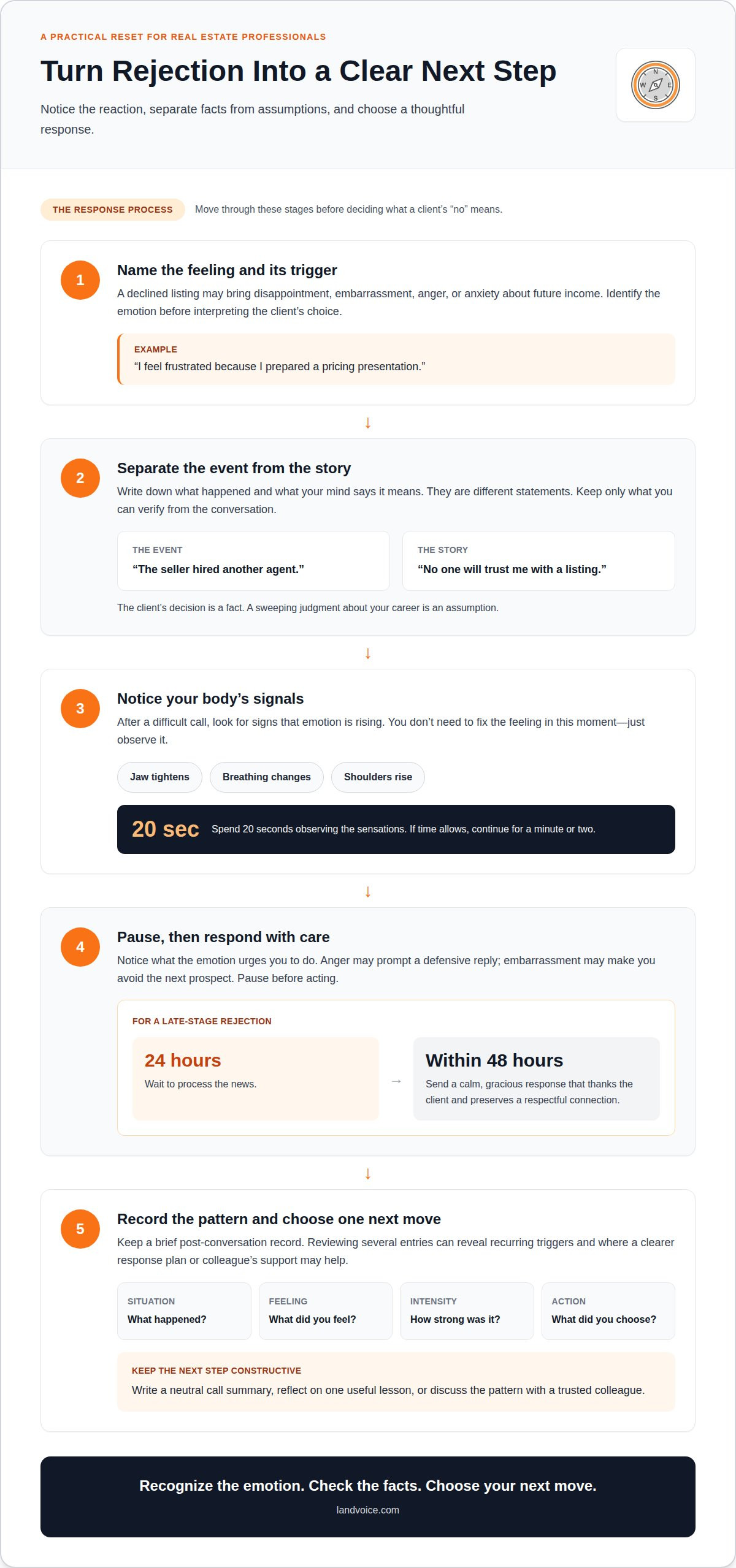
A declined listing can trigger disappointment, embarrassment, anger, or anxiety about future income. Name the feeling before deciding what the client’s choice says about you. For example, write, “I feel frustrated because I prepared a pricing presentation.” This identifies an emotion and its trigger without turning the client’s decision into proof that you lack ability.
Separate the event from the story your mind adds. The event might be, “The seller hired another agent.” The story might be, “No one will trust me with a listing.” Those are different statements. Record both, then underline only what you can verify from the conversation. This two-column exercise can stop one outcome from becoming a sweeping judgment about your career.
Your body can signal emotion before you find the right words. Notice whether your jaw tightens, your breathing changes, or your shoulders rise after a difficult call. Spend 20 seconds observing those sensations without trying to fix them. If time allows, continue for a minute or two. Then name the feeling and choose a next step, such as writing a neutral call summary.
Pay attention to what the emotion urges you to do. Anger may push you to send a defensive reply; embarrassment may make you avoid the next prospect. Pause before acting. For a late-stage rejection, wait 24 hours to process the news, then send a gracious response within 48 hours. A calm note can thank the client and preserve a respectful professional connection.
Keep a brief post-conversation record to spot emotional patterns. Note the situation, the feeling, its intensity, and the action you chose. For example: “Seller selected another agent; disappointed; delayed follow-up until I could write calmly.” After several entries, review whether the same moments trigger similar reactions. The pattern can show where you need a clearer response plan or support from a trusted colleague.
Success in client work doesn’t require suppressing every reaction. It means recognizing emotion without letting it dictate your next move. After a declined offer, name the feeling, identify the trigger, separate facts from assumptions, and choose one constructive action. If the emotion keeps disrupting your conversations or routine, discuss the pattern with someone you trust, such as a mentor or colleague.
Once the immediate reaction has settled, revisit the conversation with curiosity instead of defending your approach. Active listening can help real estate agents identify areas to improve and strengthen their business. Focus on what the client said about their priorities, concerns, and decision, and separate that feedback from guesses about their motives. If the reason for the rejection becomes clear, brainstorm solutions that address it. Reflection then becomes a practical adjustment for future conversations.
If maintaining contact feels appropriate, a post recommends sending a genuine LinkedIn connection request within 7 days after rejection. Keep the request sincere and respectful, without treating it as a way to pressure the client to reconsider. Whether or not they connect, use what you learned to refine your next step while allowing the client’s decision to stand.
3. Learning from repeated rejection
Repeated refusals call for a review, not an automatic overhaul of your approach. Treat each “no” as information about that conversation, then compare it with other outcomes. If sellers repeatedly question your marketing plan, clarify how you explain it. If prospects hesitate over timing, ask what would need to change before they’re ready. Rejection becomes useful feedback when it points to a specific choice you can examine.
To reframe rejection without making it personal, separate what the prospect said from what you assume it means. “The seller wanted a different marketing strategy” is feedback; “I’m not good at listings” is a judgment. Ask a neutral follow-up, such as, “What mattered most in your decision?” Listen for the stated reason rather than arguing with it. Their answer can inform your next conversation without defining your ability.
After a lost opportunity, review the parts of the exchange you controlled. Did you ask about the client’s priorities? Did your explanation address them? Did you leave room for questions? Mark each answer as yes, no, or unclear. Then choose one adjustment, such as asking earlier about the seller’s preferred timeline. A focused change is easier to test than rebuilding your entire presentation after one rejection.
Look for patterns across conversations, not just memorable setbacks. Keep a simple record of the prospect’s main concern and your response. If several sellers say they don’t understand your proposed process, for example, simplify the explanation and ask them to summarize what they heard. If the reasons vary, the issue may be specific to each client. Pattern recognition helps distinguish a skill to improve from circumstances you can’t control.
Active listening can reveal what an objection really means. When a seller says, “I need to think,” ask what information would help them decide. Their answer might reveal an unanswered question about timing, communication, or the steps involved. Brainstorm a direct response, then use it in a future conversation. An objection can keep the discussion open when you respond with curiosity instead of treating it as a final verdict.
Jia Jiang’s TED talk reflects on what he learned from 100 days of rejection. The useful takeaway for agents is to examine the experience rather than avoid every uncomfortable response. Debrief a difficult conversation with a trusted colleague, identify one lesson, and put that lesson into practice. Over time, repeated review turns setbacks into specific skills you can strengthen, while keeping each client’s decision in perspective.
4. Accepting that not every client will be a fit
A client’s refusal can reflect a mismatch, not a judgment of your competence. Your approach, communication style, and availability may suit one seller but not another. A homeowner seeking frequent updates, for example, may prefer a different working rhythm than a seller who wants minimal contact. Recognizing this helps you avoid treating every lost opportunity as a personal failure. The goal isn’t to win every conversation, but to serve people whose needs align with your way of working.
Fit works both ways. A prospect may want a service or level of support that doesn’t match what you can deliver well. Identify potential gaps early by asking about their priorities, preferred communication, timeline, and expectations. If a seller needs a process you can’t responsibly provide, forcing the relationship can create friction later. A respectful conversation about expectations helps both sides decide whether moving forward makes sense.
One sales representative’s review found that 80% of his rejections came from misaligned industries and poor-fit customer personas. That figure describes his review, not a rule for every agent. Still, it highlights a useful question: are you pursuing prospects who genuinely need your approach? If a homeowner consistently prioritizes a factor you don’t specialize in, repeated persuasion may waste time better spent finding a closer match.
Use a simple fit review after a prospect declines. Identify the client’s stated needs, the priorities you could meet, and any important mismatch. If the seller wanted a communication cadence you couldn’t sustain, for example, record that as a fit issue. If they misunderstood your process, consider clarifying it in future conversations. This distinction keeps useful feedback separate from personal criticism.
Be clear about your value without trying to become the right agent for everyone. Explain your process in plain language, then ask what matters most to the seller. Their response can show whether your strengths match the assignment. If they need time, respect that choice. If they choose someone else, respond professionally and leave the relationship intact. A courteous exchange preserves goodwill without pressuring the prospect to change their mind.
Set boundaries around how much effort you invest in follow-up. A prospect who says the timing isn’t right may welcome a later check-in; someone who clearly declines may prefer no further outreach. Listen for the difference and respect their answer. Your pipeline becomes more focused when you prioritize conversations with genuine alignment. Accepting a mismatch isn’t giving up. It’s directing your attention toward clients you can serve effectively.
5. Expecting rejection in real estate
Real estate agents face frequent rejection because clients make decisions amid changing timing, uncertainty, and past experiences. A seller may pause a move, stay with an existing agent, or choose someone whose approach feels more suitable. These factors can shape a decision without reflecting your ability or effort.
Expecting rejection means preparing for it, not assuming every conversation will fail. A commercial real estate professional described hearing “NO” 99 times out of 100 in the business. That experience isn’t a forecast for your results. It does show why agents benefit from treating each refusal as a possible part of prospecting, rather than proof they should stop.
Build that expectation into your workflow. Before contacting a prospect, decide what a useful outcome could be beyond securing the listing. You might learn the seller’s timeline, clarify a concern, or agree on a later conversation. Afterward, record the result and move to your next planned task. This structure keeps one answer from consuming the whole day.
Prepare for common reasons clients hesitate. A homeowner might say the timing feels uncertain, mention a negative past experience, or need more information before deciding. Respond to the concern you hear. Ask what would help them assess timing, or what they wish had gone differently with their prior agent. A thoughtful question gives you a productive next step without treating hesitation as a personal slight.
Expecting rejection also helps you avoid tying your confidence to one outcome. Set a prospecting routine you can maintain, then measure whether you completed the actions within your control. If a client says no, respect the decision and continue your work. The goal isn’t to become indifferent. It’s to stay professional and consistent when a prospect’s circumstances don’t align with your offer.
Seek support when rejection or work stress keeps disrupting your daily routine, relationships, or ability to serve clients. A coach can help you review prospecting conversations, practice objection responses, and identify changes to your process. A licensed therapist may be appropriate when emotional distress feels persistent or difficult to manage outside work. Choose support based on what you need, and bring a specific example, such as a recent lost listing, to begin the discussion.
After each refusal, use a simple reset: note the reason, identify one lesson, and return to your next planned activity. This repeatable process helps you anticipate setbacks without letting them define your professional identity.
Learning how to not take real estate rejection personally can make the next conversation easier to approach, even when the outcome remains uncertain. Real estate agents are advised to expect rejection and recognize that other successful agents have experienced it; their experiences can offer perspective without setting a standard for your results. A post claims that 94% of sales representatives quit after their fourth rejection. Treat that figure as a claim, not a rule for your own work: keep your routine realistic, review what you can learn, and seek help when needed.
Landvoice
Landvoice helps real estate professionals build a prospecting pipeline with data for potential listing opportunities. When a rejection leaves your pipeline feeling thin, consistent outreach can help you keep moving without treating one prospect’s decision as a verdict on your skills. Choose from expired listing leads, FSBO Leads, FRBO Leads, and Pre-Foreclosure Leads to focus your outreach on the opportunities that fit your business. Each conversation remains an opportunity to listen, learn, and identify whether there’s a genuine match. A steady process won’t make every prospect say yes, but it gives you a clear next step after a no. Contact Landvoice to explore how its lead offerings can support your prospecting.
Keep Moving With Confidence
Learning how to not take real estate rejection personally is an ongoing practice. Let each conversation sharpen your judgment rather than dictate your self-worth. Build a prospecting routine you can sustain, then keep showing up with curiosity and professionalism. A consistent pipeline gives you more opportunities to find clients whose needs fit your approach.
Landvoice offers Expired Pro, FSBO Leads, and FRBO Leads to support agents seeking potential listing opportunities. Choose a prospecting path that aligns with the clients you want to reach, and bring the same thoughtful approach to each conversation.
A “no” is one response, not your whole story. Keep learning, keep connecting, and take the next step with confidence.
Frequently Asked Questions
How can real estate agents build resilience and confidence after rejection?
Build confidence by recording professional actions that aren’t measured by a signed agreement. After a showing or listing presentation, note one clear explanation you delivered, one client need you understood, and one next step you handled well. Review those notes before an important appointment. They give you specific evidence of progress, even when prospective clients aren’t choosing to move forward.
How can agents use rejection to improve their sales skills and client approach?
Choose one part of your sales conversation to improve at a time. If a prospect seems unclear about your listing presentation, for example, practice explaining its purpose in plain language, then invite the client to share any remaining questions. Ask a colleague to listen to your practice run and point out where the explanation becomes confusing. Apply that adjustment in your next conversation, then assess the response.
What are common signs that rejection is affecting an agent's mental health?
Pay attention to changes that interfere with your work or life, such as persistent dread before client conversations, difficulty concentrating on routine tasks, withdrawing from colleagues, or struggling to switch off after work. These signs don’t establish a diagnosis, but they’re reasons to seek support if they continue or intensify. A licensed therapist can help you discuss the impact of rejection and identify appropriate next steps.
