



by Bruce Keith, on October 28, 2026
Paid real estate leads can be worth the cost when you have a clear follow-up process and can turn added volume into appointments. For listing lead generation for solo agents, match each source to your goals and track whether the time and spend lead to meaningful seller conversations. Paid leads can create opportunities sooner, but more contacts do not automatically mean more listings.
Weigh the cost carefully, especially when you manage every part of prospecting yourself. This guide explains when paid leads make sense, how to approach FSBOs and expired listings, and what to look for in lead sources and platforms. You’ll also learn how referrals, local visibility, and consistent follow-up can complement paid prospecting, helping you focus on the activities most likely to build your listing pipeline.
Key Takeaways
- Separate lead capture websites, lead-generation companies, and software by what each does: attract inquiries, supply prospects, or organize follow-up.
- Paid leads can add volume, but weigh them against referrals, local visibility, and other sources you can build over time.
- Use a helpful, seller-focused approach with FSBOs and expired listings, and tailor your conversation to each homeowner’s specific situation.
- Focus your targeting on the locations and property types that fit your business, then assess whether each source brings relevant prospects.
- Compare platforms by lead origin, contact speed, follow-up support, and cost per appointment; Landvoice offers Expired Pro for agents pursuing expired listings.
1. What is a real estate lead generator?
Online marketing can attract seller inquiries through local market updates, search-friendly website content, social media, and clear offers for a comparative market analysis (CMA). A solo agent can publish a neighborhood update, invite homeowners to request a home valuation, and collect their contact details through a form. These leads are potential sellers, not clients. A conversation and follow-up help you learn whether they’re considering representation.
A lead generator can be a website, a company, or software. A lead-capture website lets homeowners take action, such as requesting a valuation or asking about selling. A lead-generation company provides buyer or seller prospects, while software helps route, track, and nurture contacts. These roles can overlap, but each addresses a different pipeline need: attracting prospects, collecting inquiries, or managing follow-up.
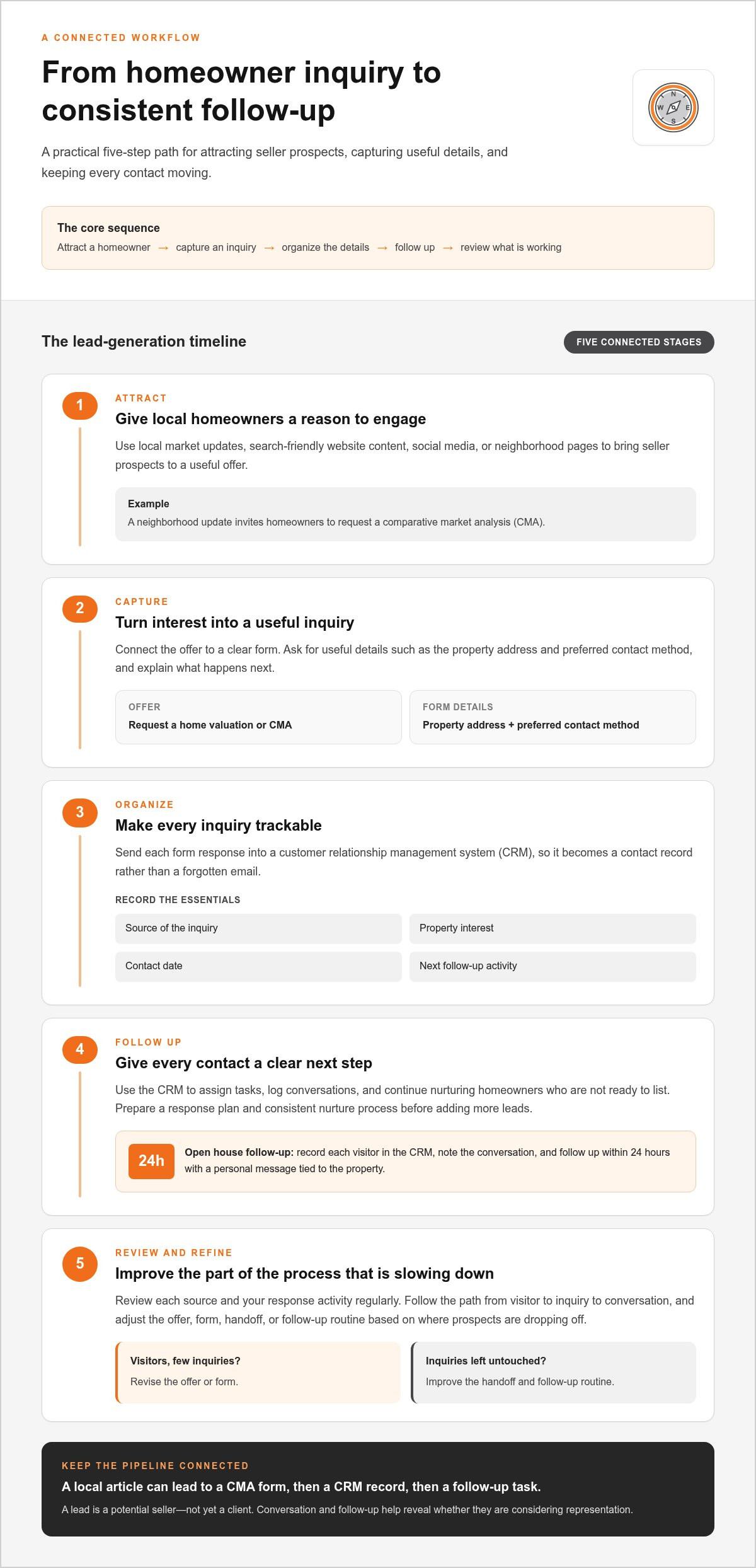
An IDX website can display property listings and local information, then invite visitors to take action. For seller prospects, pair neighborhood pages with a specific offer, such as a CMA request form. Ask only for useful details, such as the property address and preferred contact method. A clear confirmation message should explain what happens next. This connects the page that attracts homeowners to the contact record you need for follow-up.
Connect each form to a customer relationship management system (CRM), so every inquiry becomes a trackable contact instead of a forgotten email. Record the source, property interest, contact date, and next follow-up activity. Use the CRM to assign tasks, log conversations, and continue nurturing homeowners who aren’t ready to list. Before investing in more leads, prepare a response plan, scripts, and a consistent nurture process. That way, every contact has a clear next action.
Open houses create another direct capture opportunity. Offer a sign-in form that asks visitors for their contact details and permission to follow up. Add a simple prompt about whether they own a home locally or are considering a move. That information can help you identify potential sellers, not just buyers. After the event, record each visitor in your CRM, note the conversation, and follow up within 24 hours. A personal message tied to the property makes the next contact relevant.
Treat lead generation as a connected workflow: attract a homeowner, capture an inquiry, organize the details, and follow up. For example, a local market article can lead a visitor to a CMA form, which feeds the CRM and creates a follow-up task. Review each source and your response activity regularly. If a page attracts visitors but few inquiries, revise its offer or form. If inquiries go untouched, improve the handoff and follow-up routine.
2. Are real estate leads worth paying for?
Paid seller leads can be worthwhile when the added volume fits your follow-up capacity. They can create opportunities sooner, but paying for contacts doesn’t automatically produce appointments. Track qualified conversations and appointments alongside your spending and time. A source belongs in your pipeline when its results justify the resources you commit.
Balance paid channels with sources you own or build over time. Your website, local content, social profiles, referrals, and past-client relationships can attract and nurture prospects. Paid search ads and purchased inquiries may add volume sooner, while data-driven sources can help identify specific seller groups, such as owners with expired listings. Match each channel to your goals and your capacity to follow up.
Farming, referrals, and past clients can create listing opportunities without making paid leads your only strategy. Share useful neighborhood updates, stay in touch with former clients, and invite satisfied homeowners to introduce you to people considering a move. Referrals and past-client leads can be effective sources. Social media can build awareness, while consistent neighborhood activity helps grow recognition over time.
Paid listing advertising works best when it targets a clear audience with a relevant offer. For example, promote a local market analysis to homeowners in a defined area. Track the campaign from click to inquiry, conversation, and appointment. If an ad attracts traffic but few seller inquiries, adjust its message, audience, or landing page. If inquiries go unanswered, improve your follow-up workflow before increasing ad activity.
Before buying seller leads, assess how prospects are sourced, whether leads are exclusive, how quickly you can reach them, and how you’ll follow up. Compare cost per appointment, not just contact volume. Record the source, conversations, and appointments so you can evaluate results rather than rely on a provider’s headline claims. These checks make listing lead generation for solo agents a deliberate investment instead of a budget guess.
Watch for unclear lead origins, vague claims about exclusivity, and contact records that don’t match the described inquiry. Pause before committing more budget if the provider can’t explain how leads are sourced and delivered. Transparency helps you judge whether a source suits your process and whether the prospect’s interest aligns with your seller focus.
A practical approach to listing lead generation for solo agents combines sources with different strengths. Use referrals and local content to build lasting relationships, then test a paid channel with a defined follow-up plan. Review conversation quality and resulting appointments before expanding. The goal is a balanced pipeline you can actively manage, not simply a larger contact list.
3. Prospecting scripts for FSBOs and expired listings
For calls and texts, build outreach around applicable Do Not Call restrictions, consent, and opt-out requests. Screen contact records, document permissions and suppression requests, and stop outreach when a homeowner asks you to stop.
With a For Sale By Owner (FSBO), begin by recognizing the owner’s choice to sell independently. Try: “Hi, I’m [name], a real estate agent. I saw your property for sale. What’s been the most challenging part of managing the sale so far?” Then listen. If the owner mentions marketing or buyer qualification, offer one useful idea instead of pushing for an appointment. Ask whether they’d welcome a brief conversation about their next steps.
An expired listing needs a different approach. The homeowner has already experienced a listing period without a sale, so lead with curiosity, not assumptions. Try: “Hi, I’m [name]. Are you still considering a sale, or have your plans changed?” If they’re open to talking, ask what they’d change about the previous marketing, showing activity, or pricing strategy. Expired listings can be a high-conversion source when follow-up is strong.
Let the seller’s answer guide your next step. If they’re still interested, ask when they’d be available to discuss the property and its marketing. If they’re undecided, request permission to follow up and agree on a suitable time. Record the homeowner’s priorities, objections, and agreed next action in your CRM. A specific note, such as “wants fewer but better-qualified showings,” gives your next contact a relevant starting point.
Follow-up should add value, not repeat the same pitch. After an initial conversation, send a concise recap of the owner’s stated priorities. Share a relevant market update or a practical suggestion for presenting the property. Set a CRM task for the agreed follow-up, then adapt your message to the response. If the homeowner declines further contact, honor that request and update your records.
Offline prospecting can reinforce digital campaigns. Attend neighborhood events, speak with homeowners at open houses, and keep a concise introduction ready. For example: “I work with sellers in this area. What are you hoping to learn about the local market?” At an open house, follow up with visitors within 24 hours. Reference the conversation, ask whether they own nearby, and offer a relevant seller resource.
To turn a seller lead into a listing appointment, keep the sequence simple: get permission to talk, identify the homeowner’s goal, ask what’s getting in the way, and propose a next step that addresses that need. For an FSBO, that might mean discussing buyer interest. For an expired property, it could mean reviewing the previous campaign. Track each contact and outcome, then refine your scripts based on real homeowner responses.
4. Geographic and property-type lead targeting
Local market conditions and the calendar should shape your seller-lead strategy. Where older homes are common, highlight renovation and pricing considerations; in areas with many condos, tailor content to shared-building features. Adapt seasonal messaging to local activity, weather, and homeowner priorities rather than assuming every market follows the same pattern.
Start with a defined geographic farm you can serve consistently. Choose an area, then study its property mix and recent listing activity. For example, an agent focused on suburban single-family homes could publish an update about local pricing trends and selling preparation. Keep the message useful to homeowners in that area, not generic to a wider region.
Next, define the property types that fit your experience and business goals. A solo agent might focus on condos, multifamily properties, historic homes, or rural acreage. Create a separate page or social media post for each audience. A condo owner may want advice on preparing a unit for showings, while an acreage owner may ask about reaching buyers who value land and privacy.
Build targeting around homeowner signals and local relevance. Use neighborhood pages, market updates, open-house conversations, and referrals to identify people who may be considering a sale. A homeowner requesting a local comparative market analysis has a different reason for engaging than someone who follows a general real estate account. Record the source and property type, then tailor your next conversation.
Seasonal plans should respond to what homeowners in your market are asking. In spring, content might cover preparing a property for listing; during a quieter period, focus on planning, pricing, or the steps involved in a future sale. These are content ideas, not assumptions about demand. Review local listing activity and homeowner responses, then adjust your campaigns and follow-up topics.
Use a simple targeting review to sharpen your pipeline. Compare neighborhoods and property categories by inquiries, conversations, and listing appointments. If social media brings attention but few seller leads, make the offer more specific to the area or home type. If referrals come from owners of a particular property type, create relevant resources for that audience. This helps you invest time where your local knowledge can add value.
Keep your reach manageable as a solo agent. A focused farm makes it easier to recognize streets, property styles, and recurring homeowner questions. Pair one local content theme with one follow-up activity, such as sharing a neighborhood update and contacting homeowners who request more information. Consistent, relevant targeting helps you build familiarity without spreading your efforts across areas and properties you can’t serve well.
Pair free and paid lead sources, using follow-up to convert either into revenue. At age 19, Jeff Glover sold 30 properties using scripts. On a $300,000 residential property, total commission may range from $15,000 to $18,000 before brokerage splits, referral fees, and expenses.
5. Lead generation platforms for solo agents
Choose platforms based on the seller opportunities they can deliver and the work they require. Google Business Profile can attract local buyers and sellers actively searching for an agent. Google Ads can reach high-intent prospects, while social media supports local visibility and ongoing nurturing. Each platform plays a different role in your real estate pipeline.
Start with a foundation you control: a website with focused seller pages, a valuation request form, and clear local information. Build pages for the areas and property types you serve. For example, a page about selling a condo in a particular area can answer homeowner questions and invite a valuation request. Track which pages generate inquiries, not just traffic.
Then strengthen local discovery. Keep your Google Business Profile accurate and useful, with current business details and relevant updates. Pair it with search-friendly articles about local pricing, preparation, or selling timelines. A homeowner looking for an agent nearby may find your profile, then visit your website to learn about your approach. Make the next step easy to find.
Paid platforms can expand your reach. Google Ads can connect your listing marketing with people searching for seller advice or a home valuation. Social media campaigns can promote a local market update or seller resource to a defined audience. Set a clear goal for each campaign, such as qualified seller inquiries, and track the journey from click to conversation. If an ad generates visits but few inquiries, revise the message or landing page before increasing spend.
Real estate agents can also use data-driven lead platforms to identify seller prospects, including homeowners with expired listings or properties offered for sale by owner. Assess a provider by lead origin, exclusivity, contact speed, follow-up plans, and cost per appointment. These factors help you judge whether the platform fits your outreach capacity and sales process. A large contact list has little value if you can’t engage prospects consistently.
Connect each source to your CRM and label contacts by origin. Record whether a lead came from Google, a social campaign, a referral, or a data provider. Track contact attempts, conversations, and appointments. This helps you see which channels create genuine listing opportunities and which consume time without moving prospects forward. Review activity regularly and adjust your mix.
The best platform mix is the one you can use consistently. A solo agent might maintain a local search presence, publish useful seller content, and test one paid channel at a time. Use the results to decide where to focus next. This disciplined approach makes listing lead generation easier to measure, refine, and connect to real seller conversations.
Landvoice: Expired Pro
Landvoice offers Expired Pro for agents pursuing expired listings. It provides data on homeowners whose listings have expired, giving you a source to consider alongside referrals, local marketing, and other prospecting approaches. If you’re building a pipeline around different seller situations, Landvoice also offers FSBO Leads, FRBO Leads, and Pre-Foreclosure Leads. Choose the source that fits the homeowners you want to reach, then use your own follow-up process to start relevant conversations and assess each opportunity. Explore the options and decide which lead source aligns with your prospecting plan. Visit landvoice.com to learn more.
Build a Listing Pipeline You Can Sustain
Make your next move measurable. Choose one seller audience, one channel, and one follow-up routine you can maintain alongside your daily work. Set a clear starting point, record each meaningful conversation, and review what moves prospects toward an appointment. This gives you a practical way to judge whether a source deserves more of your attention.
Effective listing lead generation for solo agents isn’t about chasing every new platform. It’s about building a repeatable process around the homeowners you want to serve. Refine your approach as you learn which messages prompt real conversations and which activities distract from them. A focused pipeline gives you more control over your prospecting and your time.
Ready to make your next prospecting move?
Choose a next step, follow through consistently, and keep building a stronger listing business.
Frequently Asked Questions
Are real estate leads worth paying for?
Paid leads can be worthwhile if they fit your business and you can follow up consistently. An agent with room for seller consultations may benefit from a source that creates relevant conversations. If you’re already struggling to respond to current inquiries, improve your capacity first. Judge paid sources by the quality of seller conversations they generate and whether those opportunities support your business goals.
What is a real estate lead generator?
A real estate lead generator is a source or tool that helps agents attract potential clients and bring their details into a workable process. A homeowner requesting a property valuation through your site is one example; a platform supplying seller prospects is another. The important question is what happens next: capture the person’s reason for reaching out, understand their selling plans, and choose a relevant follow-up.
How can solo agents generate listing leads through FSBO and expired listings?
Start by understanding the homeowner’s situation, then make your outreach specific to the property. For an FSBO, ask whether the owner is still handling the sale independently and what kind of buyer response they’ve received. For an expired listing, ask whether selling remains a goal and what they’d want to change next time. Use their answers to offer a relevant conversation, not a generic pitch.
