



by Bruce Keith, on November 13, 2026
Overcoming the fear of calling pre-foreclosures starts with preparation, not a perfect script. Learn the property basics, introduce yourself clearly, and focus on listening rather than pushing for a sale. This gives you a practical way to begin a sensitive conversation respectfully.
It’s normal to feel uneasy about contacting homeowners who may be under financial pressure. You can still make the call with empathy and a clear purpose. Prepare thoughtfully, ask considerate questions, respond calmly to objections, and build a weekly prospecting routine you can sustain.
Key Takeaways
- Prepare relevant property information and a clear, respectful reason for reaching out before you contact a homeowner.
- Introduce yourself plainly and let the homeowner guide how much they want to share.
- Use open-ended questions and listen for the person’s concerns, priorities, and possible next steps.
- When a homeowner hesitates about selling, offer useful information without pushing for a decision.
- Build a consistent prospecting routine, record important call details, and follow up thoughtfully rather than intrusively.
1. Avoiding shame-triggering foreclosure language
Your opening words can either lower tension or end the conversation. Start with your name, your role in real estate, and a straightforward reason for calling. For example: “Hi, I’m Jordan, a real estate agent. I’m calling about your property. Would you be open to discussing it?” This explains your purpose without labeling the homeowner’s circumstances.
Say you’re interested in discussing the property, not that you’re calling because it’s in foreclosure. Avoid language that may sound accusatory, such as “behind on payments” or “distressed owner.” Identify yourself, explain your interest, and ask permission to continue. Don’t assume the homeowner’s situation or lead with foreclosure language unless they bring it up.
Respectful prospecting means avoiding assumptions based on a notice or property record. A public filing doesn’t tell you why someone may consider selling or whether they want to discuss it. Don’t claim to know their finances, say a sale is their only option, or imply a deadline means they must work with you. If the person says the information is wrong, acknowledge that calmly and end the call if they ask you to.
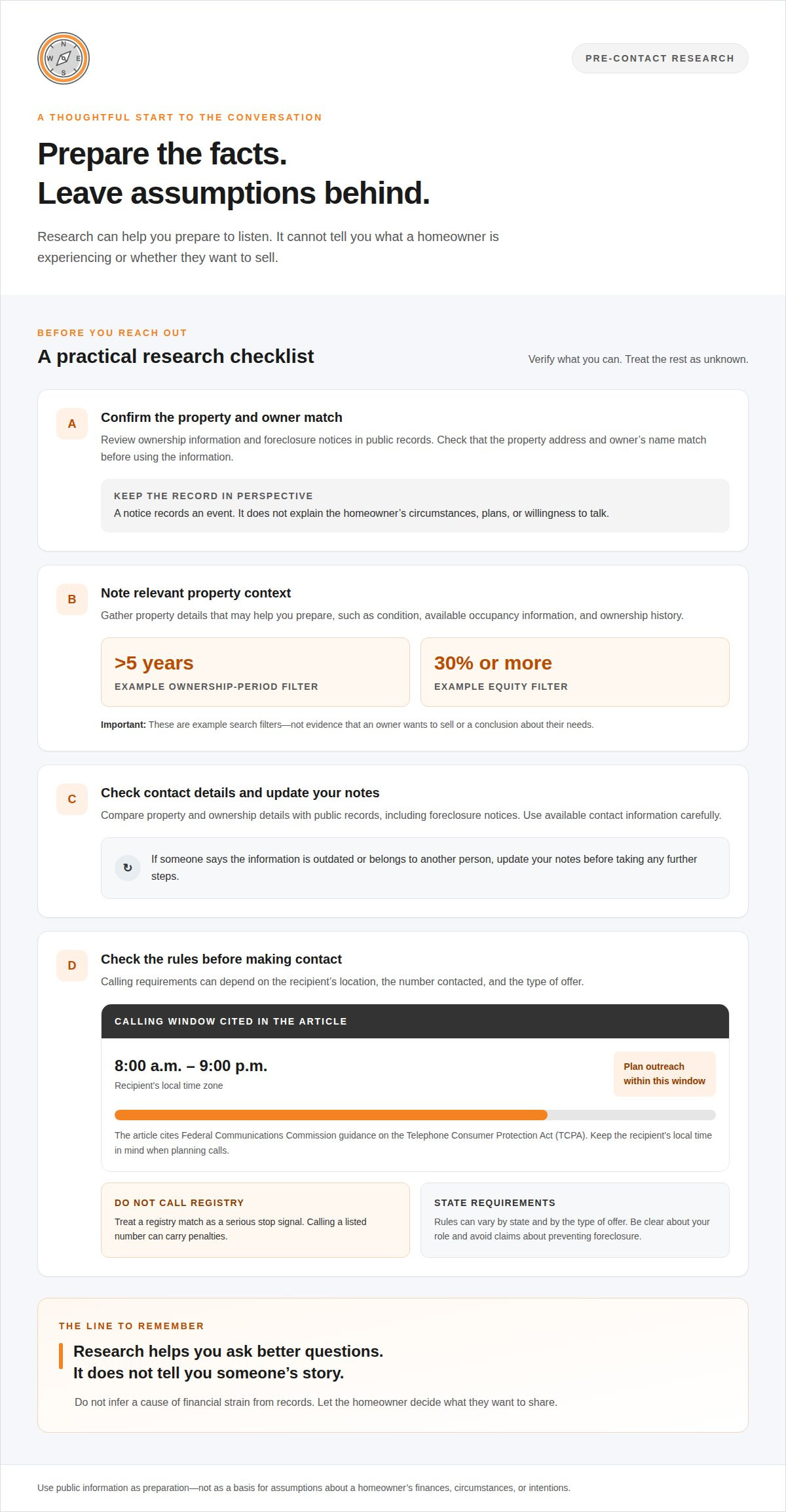
Be mindful of timing, too. According to the Federal Communications Commission, the Telephone Consumer Protection Act (TCPA) prohibits outreach calls between 8:00 a.m. and 9:00 p.m. in the recipient’s local time zone. Keep this window in mind when planning calls. A respectful introduction doesn’t replace appropriate calling practices.
Scam concerns make clear identification essential. Don’t pose as a lender, government agency, attorney, or foreclosure counselor. Don’t promise to stop foreclosure, guarantee an outcome, or claim special authority over the homeowner’s loan. If asked whether you can prevent foreclosure, explain your role accurately: you’re a real estate professional interested in discussing the property. Never use urgency or fear to push a decision.
Avoid pressure tactics such as demanding an immediate answer, repeatedly interrupting, or asking the homeowner to sign something during the first conversation. Ask whether they’re willing to talk, then respect their answer. If they’re not ready to sell, offer a low-pressure conversation about their real estate options without implying that selling is necessary. If they decline further contact, thank them and close politely. An honest, calm call protects trust, even when it doesn’t lead to a listing.
Some investors recommend contacting homeowners to express interest in buying their home without mentioning foreclosure unless the homeowner raises it. This keeps the conversation focused on your interest in the property rather than assumptions about the homeowner’s circumstances. If foreclosure comes up, listen and respond without promising an outcome or presenting a sale as necessary.
Some for-profit foreclosure prevention companies charge fees often equal to two or three months of mortgage payments. If a homeowner asks about these companies, state this carefully and don’t imply that you provide foreclosure prevention services. Be clear about your role, answer only what you know, and let the homeowner decide whether to continue the conversation. A restrained, accurate response can preserve trust without adding pressure.
2. Researching the property and homeowner’s situation before calling
Start with the property, not assumptions about the homeowner. Review ownership information and foreclosure notices in public records, then confirm that the property address and owner’s name match. A notice can identify a recorded event, but it doesn’t explain the person’s circumstances or plans. Treat it as a reason to prepare, not permission to make claims about someone’s finances.
Next, look at the property’s details and possible selling context. Note its condition, occupancy information available to you, and relevant ownership history. An ownership period over 5 years is one example filter for a pre-foreclosure search, not proof that the owner wants to sell. An equity position of 30% or more can also be used as an example filter. Neither detail tells you what the homeowner needs.
To verify pre-foreclosure leads and find accurate contact information, compare the property and ownership details with public records, including foreclosure notices, before calling. Use available contact information carefully, and update your notes if the person says the information is outdated or belongs to someone else.
Research can help you prepare to listen, but it can’t reveal the underlying problem. Job loss, divorce, or medical bills may contribute to financial strain, but these are possibilities, not conclusions about a particular homeowner. Don’t mention a presumed cause. Instead, ask whether they’re open to discussing the property and let them decide what to share.
For calling rules, the Telephone Consumer Protection Act (TCPA), according to the Federal Communications Commission, prohibits outreach calls between 8:00 a.m. and 9:00 p.m. in the recipient’s local time zone. Also treat a Do Not Call Registry match as a serious stop signal; calling a listed number can carry penalties. Follow applicable requirements before making contact.
State laws regulating calls to distressed homeowners or foreclosure rescue offers can vary depending on the property’s state and the type of offer. Before making claims about preventing foreclosure or offering rescue services, identify the relevant state rules and be clear about your role. Discussing a potential property sale isn’t the same as promising financial or legal help.
Prepare more than one respectful path forward. If a homeowner isn’t ready to sell, offer to discuss options without pressure, or ask whether they’d prefer no further contact. A concise, one-page homeowner options guide can support an informed conversation, but don’t present it as a substitute for lender or housing-counselor help. A structured prospecting workflow can help you organize lead research before outreach.
3. Showing empathy and listening to distressed homeowners
A pre-foreclosure call may bring anger, confusion, apathy, or denial. Don’t treat any reaction as a personal challenge to overcome. Give the homeowner space to respond, keep your tone even, and avoid interrupting. If someone sounds upset, acknowledge what they said: “I hear that this is a difficult time. Would you prefer to talk another day?” Then honor their answer.
Listening means letting the homeowner define the problem. Ask one open-ended question, then pause: “What are you thinking about doing next?” Their answer may involve the property, family circumstances, or concerns about equity. Don’t recommend a sale before you understand their priorities. Reflect back what you heard: “It sounds like timing is your main concern. Did I understand that correctly?”
Build your script around three steps: identify yourself, explain why you’re calling, and invite the homeowner to talk. For example: “I’m a real estate agent calling about your property. Would you be open to sharing what you’re considering?” Keep the language natural rather than memorized. Rehearse with a colleague or record yourself, then assess whether you sound clear, calm, and respectful.
Ask low-pressure questions that give people control. “Would it help to talk through possible next steps?” invites a conversation without assuming they want to sell. “Is there anything about the property you’d like to discuss?” lets them choose what to share. Avoid stacking questions or asking for sensitive financial details before trust has been established.
When a homeowner mentions a challenge, respond to the words they used. If they say, “I don’t know what to do,” try: “What feels most urgent for you right now?” If they’re not ready to sell, don’t argue about equity or timing. Offer general information about property sales, then ask whether they’d like to continue the conversation.
Rapport comes from consistency, not pressure. Summarize the homeowner’s concern before suggesting a possible path: “You’re weighing whether selling could address the property issue, but you need time.” Ask whether you understood correctly. A win-win discussion starts with the homeowner’s priorities and your honest role, not a predetermined deal.
End each call with a clear choice. Ask whether they’d like a follow-up conversation, prefer to reach out themselves, or want no further contact. Record their preference and the concern they raised. This keeps future outreach aligned with their wishes and makes empathy part of a repeatable prospecting process.
4. Responding calmly to objections about selling
An objection is information, not an invitation to argue. If a homeowner says, “I’m not ready to sell,” acknowledge their decision and offer information instead of pressure. You might say, “I understand. Would it help to talk through your options, without making a decision today?” Then pause. Give the homeowner room to accept, decline, or explain what’s holding them back.
Use a simple response pattern: recognize the concern, ask one clarifying question, and respect the answer. If they say, “I need to think about it,” try, “Of course. What would help you feel comfortable considering a sale?” If they don’t want to discuss it, close politely. The goal is to understand their position, not turn every objection into a rebuttal.
Different objections call for different responses. If someone says, “I already have an agent,” you can reply, “Thanks for letting me know. I won’t interfere with that relationship.” If they say, “I don’t trust calls like this,” explain your role plainly and offer to end the conversation. A direct response builds more credibility than insisting they have nothing to worry about.
To manage anxiety and rejection during homeowner outreach, focus on what you control: your preparation, tone, and respect for each person’s answer. A homeowner’s refusal reflects their current choice, not a verdict on your ability as a real estate professional. Take a breath between calls, note the outcome, and return to your process.
Keep each exchange concise. Ask questions that clarify motivation, timing, or the problem the homeowner wants to address. For example: “Is your main concern the timing, or are you weighing whether to sell at all?” If they share a concern, reflect it accurately before offering relevant information. Don’t promise that a sale will solve financial difficulties or stop foreclosure.
When someone asks you to send information, agree on what would be useful and how they’d prefer to receive it. If they request time, ask whether they want you to follow up and record their preference. Avoid repeated messages that disregard a clear boundary. A calm conversation may end without a listing, but it still gives you a clear next step: follow up only with permission or move on respectfully.
Before ending, summarize the homeowner’s position in one sentence: “You’re not considering a sale right now, and you’d prefer no follow-up.” Confirm you understood, then honor the request. This final check prevents misunderstandings from turning into unwanted contact and grounds your next prospecting decision in what the homeowner actually said.
5. A weekly pre-foreclosure prospecting routine
Give prospecting a fixed place in your calendar. Spend 20-30 minutes each Monday reviewing new pre-foreclosure leads, removing duplicates, and organizing your call list. Then block 1-2 hours per day for focused outreach. A scheduled routine replaces the daily debate about whether to start and makes preparation part of the work.
Set a manageable session target, such as reviewing 30-50 leads before or during a prospecting block. Keep calls concise. Ask questions that help you understand the homeowner’s motivation, timing, and concern. After each conversation, record the person’s interest level, stated foreclosure timeline, concerns, and relevant family situation. Accurate notes make the next contact more personal and prevent you from asking the same question repeatedly.
How many calls or follow-ups are appropriate? There’s no single call count that fits every homeowner. Use a measured sequence instead: make an initial call and leave a voicemail on Day 1, then follow up about a week later if the homeowner hasn’t asked you to stop.
Alternatives to calling include a friendly, low-pressure text on Day 3, a follow-up email on Day 6, or a handwritten note or flyer on Day 10. Another call or email can follow from Day 14 onward. Treat these as a sample cadence, not permission to keep contacting someone who declined. Space out messages and honor the homeowner’s stated preference.
Use your Monday review to choose the next action for each lead. For example, mark one person for a follow-up email, another for a later call, and a third for no further outreach. Keep any message relevant to what the homeowner discussed. A brief note about the property conversation is more useful than a generic pitch that ignores their concern.
At the end of each prospecting block, review completed contacts and update the next steps. Notice where hesitation disrupted your workflow: Was the opening unclear, or were you missing a prepared response? Rehearse that moment before the next session. Over time, this weekly rhythm helps you approach each lead with a clear purpose, thoughtful follow-up, and reliable records.
Some investors advise keeping calls brief and using questions to identify the homeowner’s motivation, timing, and problem to solve. Let the answers shape the next step rather than treating the conversation as a chance to deliver a full pitch. If the homeowner shares a concern, acknowledge it and note what would be useful to discuss later. A focused exchange gives the person room to explain what matters without feeling hurried or pressured to decide.
Real estate agents calling pre-foreclosure leads can follow up about a week after the initial call. Before reaching out again, consider the homeowner’s contact preferences and whether there’s a relevant reason to reconnect. Avoid contacting leads so often that outreach feels intrusive. If there’s no response, be patient rather than sending repeated messages. If someone asks you to stop, respect that request and update the record.
Landvoice: Pre-Foreclosure Leads
Landvoice offers Pre-Foreclosure Leads for real estate professionals building a property prospecting pipeline. Use them to put your preparation, respectful opening, and follow-up routine into practice with a focused lead source. The leads support your outreach; your research and homeowner-centered conversations shape what happens next. Keep your approach grounded in accurate records, clear introductions, and respect for each person’s preferences. Lead sourcing can then support a practical prospecting process rather than replace it.
Ready to discuss Pre-Foreclosure Leads for your prospecting workflow? Contact Landvoice.
Turn your next conversation into a confident step forward
Each thoughtful homeowner conversation strengthens your prospecting discipline. You don’t need a flawless delivery to begin. You need a clear purpose, a steady process, and a willingness to treat every response as useful information. That’s how overcoming the fear of calling pre-foreclosures becomes consistent professional action, not a daily test of confidence.
When you’re ready to build a more dependable prospecting pipeline, Landvoice offers Pre-Foreclosure Leads alongside options such as Expired Pro, FSBO Leads, and FRBO Leads. Choose the lead source that fits your current goals, then bring the same respectful, homeowner-first approach to every contact.
Make your next step deliberate. Set aside time for outreach, keep your notes organized, and let each conversation inform the next. Consistency grows through action, and you can start with one prepared contact.
Frequently Asked Questions
Why do real estate investors fear calling pre-foreclosure homeowners?
Investors may worry about intruding, saying the wrong thing, or being rejected. Those concerns can make each call feel like a judgment of their professional ability. Overcoming the fear of calling pre-foreclosures means separating the result from the quality of your effort. A call can be worthwhile if it confirms the homeowner doesn’t want to discuss the property, allowing you to respect that choice and move on.
What ethical risks should investors consider when contacting homeowners facing foreclosure?
Ethical risks include misrepresenting your role, taking advantage of someone’s difficult circumstances, or implying you can resolve financial or legal problems. Overcoming the fear of calling pre-foreclosures should never mean pushing past a homeowner’s boundaries. Keep property discussions separate from financial advice, avoid sharing private details, and don’t request sensitive information without a clear reason. If asked about specialized foreclosure guidance, explain your role as a real estate professional honestly.
