



by Bruce Keith, on October 6, 2026
What if the same transaction milestone that reassures one client makes another more anxious? The emotional cycle of a real estate transaction has recognizable turning points, but it doesn’t unfold the same way for every buyer or seller. Excitement can give way to doubt as decisions, negotiations, and deadlines approach. That shift isn’t automatically a problem, but it is a cue to listen closely and communicate clearly.
As an agent, you need to know when uncertainty is a normal part of the process and when a client needs more information or a reset in expectations. This guide explores the emotions buyers and sellers may experience at key stages, why they can react differently to the same milestone, and how to respond with empathy and confidence. You’ll get a practical framework for keeping clients informed, helping them make considered decisions, and moving the transaction forward without assuming every client feels the same way.
Key Takeaways
- Use the emotional cycle of a real estate transaction as a flexible guide, not a script for predicting how every client will feel.
- Spot how decisions, negotiations, due diligence, and closing can create different pressures for buyers and sellers.
- When a client seems uncertain, listen first, clarify the concern, explain available choices, and agree on a next step.
- Proactive, clear updates can help reduce avoidable uncertainty without promising a particular outcome.
- Review your communication after key milestones and capture lessons you can apply to future client relationships.
The Emotional Cycle of a Real Estate Transaction: Why Feelings Shift
Buying a home or completing a sale can bring excitement, uncertainty, and stress at the same time. Clients are making consequential decisions while working through unfamiliar steps, weighing choices, and waiting for important information. Those feelings may rise and fall as the transaction progresses, but they don’t follow a reliable script.
The emotional cycle of a real estate transaction is a flexible pattern of feelings that may accompany key decisions and milestones, not a guaranteed sequence or timeline. Use it to stay alert to possible concerns, not to predict what a client must be feeling.
Uncertainty often grows when a decision is still pending. A buyer may be waiting for inspection findings or financing updates; a seller may be weighing an offer or negotiating terms. Deadlines can add pressure because clients need to make choices within a set timeframe. These moments can intensify feelings, but the practical issue behind the emotion is often specific: what does this information mean, what are the options, and what happens next?
The wider process also keeps changing. Shifts such as the growth of online home search and buyer agency are part of broader real estate trends. They shape how people encounter information and enter a transaction, but they don’t determine how any individual client will respond.
Why a transaction can feel exciting and stressful at once
A home purchase may represent a long-awaited move, while also requiring the buyer to evaluate a major commitment. A seller may feel ready for what comes next and still feel uncertain about an offer, timing, or the transition out of a familiar home. Excitement doesn’t cancel out questions. Unfamiliar steps and decisions that depend on new information can make the experience feel less predictable.
Personal circumstances matter. A client’s priorities, past experiences, and plans can shape which parts feel manageable and which raise concerns. Avoid treating visible enthusiasm as proof that everything is settled, or quietness as proof that something is wrong. Ask what’s on their mind.
Is there one emotional cycle every client follows?
No. There’s no single emotional timeline or sequence every buyer and seller follows. The cycle is a planning framework, not a psychological diagnosis or a forecast. One client may feel most uncertain during negotiations; another may feel steady through that stage and have more questions when preparing for closing.
Keep your approach direct and open. Ask, “What feels most important to sort out right now?” or “What questions do you have about the next step?” Then listen before you explain. Your role isn’t to label a client’s reaction. It’s to understand the concern, clarify the decision ahead, and help them move forward with realistic expectations.
The Main Emotional Turning Points in a Real Estate Transaction
A transaction can move forward and still raise fresh questions. A buyer may feel excited after choosing a home, then hesitate when deciding what to offer. A seller may welcome an offer but feel uncertain about its terms or what comes next. Milestones can signal progress while bringing new questions into focus.
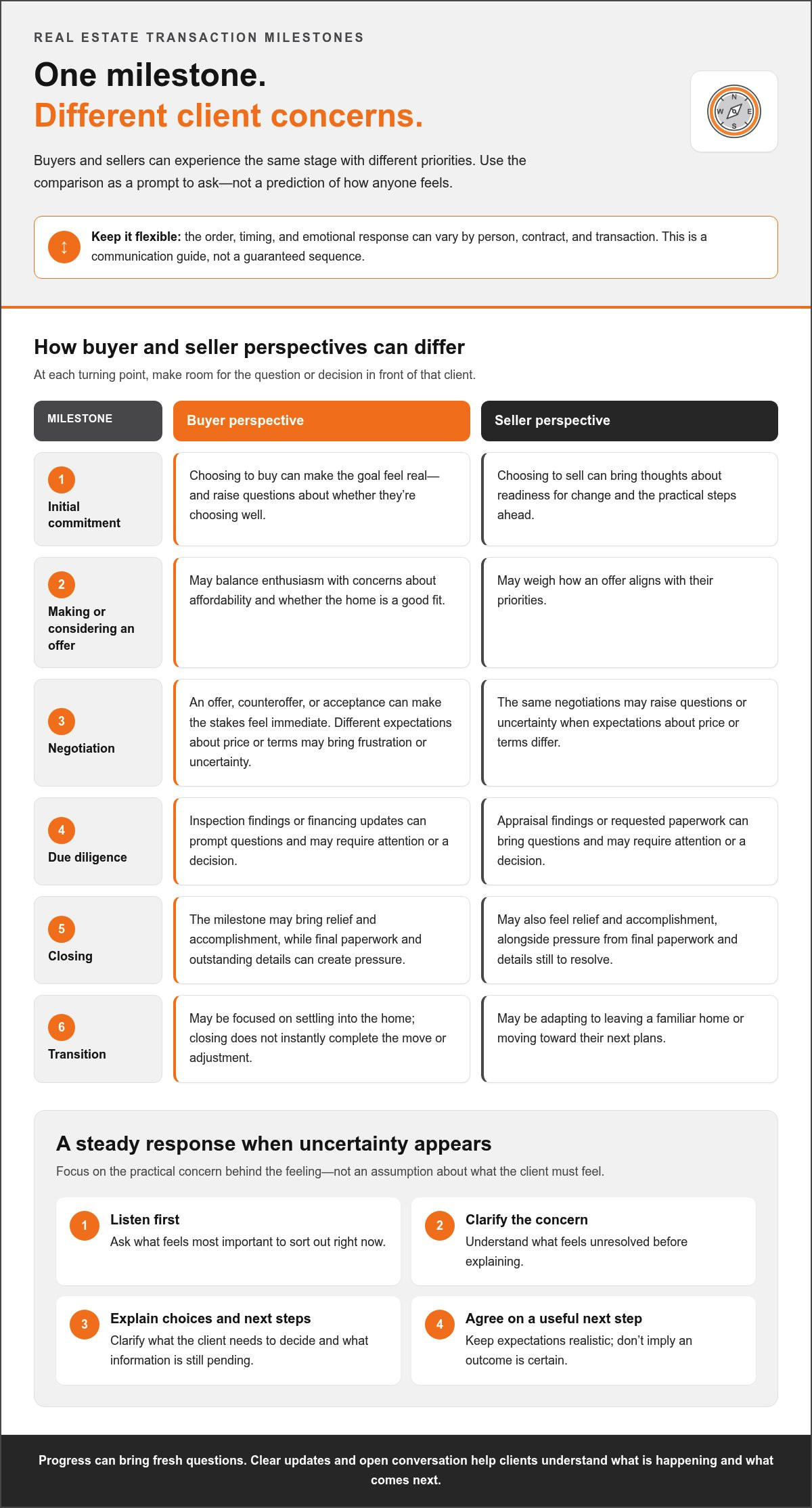
Use these turning points as prompts for communication, not predictions. The order, timing, and emotional response can vary by contract, person, and transaction.
- 1. Initial commitment. Choosing to buy or sell makes the goal feel real. Buyers may wonder whether they’re choosing well; sellers may weigh readiness for change and the practical steps ahead.
- 2. Preparing to make or consider an offer. Buyers may balance enthusiasm with concerns about affordability and fit. Sellers may consider how an offer aligns with their priorities. Clear explanations of the next step can help clients surface questions before making a decision.
- 3. Negotiation. An offer, counteroffer, or acceptance can make the stakes feel immediate. Different expectations about price or terms may bring frustration or uncertainty. A University of Pennsylvania paper, Emotions in Real Estate Negotiations, explores the role emotions can play in real estate negotiations. Keep the conversation grounded in the client’s goals and the choices in front of them.
- 4. Due diligence. Inspections, appraisal findings, financing updates, or requested paperwork can generate questions because they may require attention or a decision. Explain what the milestone involves and what information is still pending, without implying an outcome is certain.
- 5. Closing. Reaching this milestone may bring relief and a sense of accomplishment. At the same time, outstanding details and final paperwork can create pressure. Confirm next steps and make space for last-minute questions.
- 6. Transition. Closing doesn’t instantly complete the move or adjustment. Buyers may be focused on settling in; sellers may be adapting to leaving a familiar home or moving toward their next plans.
For agents, the practical move is simple: explain what’s happening, clarify what the client needs to decide, and invite questions. Avoid assuming that silence means confidence or that concern means a client has changed their mind. Ask what feels unresolved, then agree on a useful next step.
Steady client care takes attention, even while you’re building future opportunities. Explore tools for keeping your prospecting pipeline active alongside current transactions.
How Buyers’ and Sellers’ Emotions Differ at Key Transaction Stages
Buyers and sellers may reach the same milestone with different priorities. An inspection, for example, can prompt a buyer to reconsider condition and future costs, while a seller may focus on how requested repairs could affect the agreement or moving plans. Shared milestones don’t mean shared emotional experiences.
The table offers possible pressures to listen for, not a profile to impose. Goals, timing, finances, past experiences, and plans after closing can all change how a client responds.
| Transaction stage | Buyers may be weighing | Sellers may be weighing |
|---|---|---|
| Decision-making | Whether the home fits their needs, budget, and longer-term plans. | Whether the offer and terms fit their priorities and next steps. |
| Uncertainty | What inspection, appraisal, or financing updates could mean for their decision. | How buyer feedback, timing, or transaction details may affect the sale. |
| Negotiation | Whether to accept, counter, or reconsider based on the terms and their goals. | How to respond to an offer or request without losing sight of their priorities. |
| Transition | How to prepare for moving and adjust to a new home and routine. | How to coordinate the handover and manage what comes after leaving the property. |
What buyers may feel as the purchase moves forward
Enthusiasm can sit alongside practical questions: Is the purchase affordable? Does the home’s condition work for them? Does the timing fit? Will it suit their needs over time? New inspection information or a financing update may bring those questions back into focus. That doesn’t, by itself, mean the buyer has lost interest or that the transaction is failing. Clarify what the information means, identify the decision in front of them, and give them room to consider their options.
What sellers may feel during negotiation and handover
A seller may feel attached to a home while also being ready to move. An offer or feedback about the property can feel personal, even when the discussion is about the home’s condition, price, or terms. Avoid rushing to reassure or persuade. Explain the choices clearly, connect them to the seller’s stated goals, and let the client decide how to proceed. As handover approaches, attention may shift to timing, logistics, and the next move.
The emotional cycle of a real estate transaction can look different on each side of the same deal. Ask what matters most to this client now, rather than assuming their role tells you how they feel.
How Real Estate Agents Can Support Clients Through Emotional Turning Points
When a client’s emotions shift, don’t rush to fix the feeling or push the transaction forward. Use a steady process: listen, clarify the concern, explain the choices, and agree on the next step. This keeps the conversation focused and helps clients make informed decisions without implying you can control the outcome.
- Listen. Give the client room to explain what’s worrying or unclear.
- Clarify. Ask what decision or piece of information is driving the concern.
- Explain. Lay out the known facts and available choices in plain language.
- Agree. Confirm what happens next, who will handle it, and when you’ll follow up.
A simple phrase can open the conversation: “I can see why this feels uncertain. What would help you feel clearer about the next step?” It acknowledges the concern without assuming what the client needs.
Communication habits that build confidence without pressure
Make updates specific. Explain what a milestone means, what action is needed now, and what remains unknown. If a client goes quiet, don’t treat silence as agreement or confidence. Ask, “What still feels unclear?” Then check that your explanation landed: “Would it help to walk through the options again?” Follow through on the update you agreed to provide. Consistency builds trust; overpromising doesn’t.
Keep your role clear, too. You can explain transaction steps and help clients understand the choices in front of them, but don’t present legal, financial, or contractual interpretations beyond your role. If a question calls for that kind of guidance, make the boundary clear and point the client toward the appropriate professional involved in the transaction.
Responding when expectations change
Start by acknowledging the reaction. If an inspection raises concerns or financing information changes, recognize the client’s disappointment or worry before moving into solutions. Then separate confirmed information from what’s still pending. Avoid unsupported reassurances such as “Everything will work out.” A clear account of what’s known is more useful than certainty you can’t promise.
Next, help the client compare available choices against their priorities. Explain the immediate implications you can speak to, invite questions, and leave the decision in the client’s hands. The emotional cycle of a real estate transaction may bring uncertainty back at different points, but a calm, repeatable communication process gives you a reliable way to respond without minimizing concerns or applying pressure.
Turn Transaction Insight Into a Stronger, More Consistent Real Estate Business
Emotional awareness won’t let you control a client’s reaction or guarantee a transaction outcome. It will help you communicate with more care and precision. The emotional cycle of a real estate transaction can remind you to check in at key milestones, notice when a client needs clearer information, and adapt your approach rather than rely on assumptions.
Build a repeatable client-support routine
At the start of a client relationship, note how they prefer to communicate and what questions are top of mind. Then use each milestone as a prompt to share a clear update, explain any immediate action, and confirm what happens next. A short written record can help you follow through and keep important details from getting lost during a busy transaction.
After a milestone, take a moment to review the exchange. Did the client understand the decision in front of them? Did your update arrive when agreed? What helped them feel informed, and what should you clarify next time? Record useful lessons, but don’t turn one client’s preferences into a formula for everyone. A process creates consistency; attentive listening keeps it personal.
Keep future opportunities moving while serving current clients
Active transactions can take focused time, but your future pipeline still needs attention. A balanced prospecting routine helps you continue creating opportunities alongside client work instead of waiting for a deal to close before restarting business development. Set a realistic rhythm that fits your workload, protect time for it, and adjust when client needs require your attention.
Landvoice provides real estate lead-generation tools, including data for expired listings, FSBO properties, and pre-foreclosures, as well as Neighborhood Search. These tools can support prospecting while you remain focused on the clients and decisions in front of you. Pair a consistent workflow with thoughtful client communication. Both matter to a durable real estate business.
Put Client Insight Into Practice and Keep Building
The emotional cycle of a real estate transaction offers a useful guide, not a prediction. Use it to notice when a milestone may raise new questions, remember that buyers and sellers can experience the same moment differently, and respond by listening, clarifying, and agreeing on a next step.
After each key milestone, review whether your communication helped the client feel informed. Carry those lessons forward while adapting to each person’s needs. Strong client care and steady prospecting can work side by side, helping you support current transactions while continuing to develop future opportunities.
Landvoice has served the real estate industry for over 30 years, with lead-generation data that includes expired listings, FSBO properties, and pre-foreclosures.
Keep showing up with clear communication and a thoughtful plan. You can make every client interaction stronger while building momentum for what comes next.
Frequently Asked Questions
What is the emotional cycle of a real estate transaction?
The emotional cycle of a real estate transaction is a flexible pattern of feelings that may arise as clients face decisions and milestones. Excitement, uncertainty, disappointment, or relief can surface at different points, such as making an offer, reviewing inspection findings, or preparing to close. It isn’t a fixed sequence, timeline, or prediction. Use it to prompt thoughtful check-ins, not to assume what a client feels.
What are the emotional stages of buying a house?
Buyers may move through excitement, questions, uncertainty, negotiation pressure, and relief, but there’s no universal order. Early enthusiasm may share space with concerns about affordability and fit. An offer can make the decision feel immediate, while inspection or financing updates may prompt fresh questions. Closing can bring relief, followed by the demands of moving and adjusting. Treat these as possible turning points, not required stages.
Do sellers experience the same emotions as buyers during a transaction?
No. Buyers and sellers may share milestones, but their concerns can differ. A buyer may focus on the home’s condition, affordability, or long-term fit. A seller may weigh offer terms, feedback, attachment to the property, or plans for the next move. Individual goals, timing, and circumstances also shape reactions. Ask each client what matters most rather than assuming their role tells you how they feel.
Why do buyers get anxious after an offer is accepted?
An accepted offer can make a major decision feel more immediate. Buyers may start thinking about affordability, inspection results, financing updates, timing, or whether the home still fits their needs. New information can bring questions even when the buyer remains committed. Anxiety alone doesn’t establish that the transaction is in trouble. Clarify what specifically concerns the buyer, explain the next step, and distinguish known details from pending information.
How can real estate agents support emotional clients?
Listen first, then ask what feels unclear or most concerning. Explain the relevant milestone and available choices in plain language, and agree on a specific next step. Proactive updates can reduce avoidable uncertainty, but don’t promise an outcome you can’t control. A useful check-in is, “I can see why this feels uncertain. What would help you feel clearer about the next step?” Confirm understanding and follow through as agreed.
Is it normal to feel stressed during a real estate transaction?
Stress can arise during a transaction because clients are making significant decisions, managing unfamiliar steps, and responding to deadlines or new information. The level and timing of stress vary from person to person, so don’t treat it as proof that something is wrong or assume everyone experiences it. Ask what’s driving the concern. Clear information, realistic expectations, and a defined next step can help the client focus on the decision at hand.
