



by Bruce Keith, on September 25, 2026
What if sellers whose listings expired are less afraid of another agent’s pitch than of repeating the same disappointing experience? Understanding what sellers with expired listings fear most starts with that distinction. A failed sale can leave homeowners questioning the price, marketing, property condition, or whether anything will be different next time.
These homeowners may still want to sell, but frustration can make a generic promise sound like more of the same. Criticize the previous agent or rush to pitch a quick fix, and you risk losing trust before a real conversation begins. Every seller has a different story, so start by listening rather than assuming.
This article explains how to recognize common concerns without treating them as a script. You’ll learn how to acknowledge disappointment, ask relevant questions, and use the seller’s feedback to guide a productive conversation. The goal isn’t to promise an outcome you can’t guarantee. It’s to show up prepared, respectful, and ready to discuss a fresh strategy.
Key Takeaways
- Understand why an expired listing can leave a homeowner cautious without assuming what caused the sale to fall through.
- Explore what sellers with expired listings fear most, and ask respectful questions about trust, timing, and communication.
- Prepare for outreach by reviewing available lead information, choosing a relevant opening, and listening before suggesting next steps.
- Use seller feedback to shape a useful follow-up instead of relying on a generic pitch or promises about the outcome.
- Build a repeatable workflow for organizing leads and recording next steps so each conversation starts with better preparation.
What Sellers With Expired Listings May Fear Most
An unsuccessful sale can leave a homeowner disappointed, cautious, or unsure what to do next. The end of a listing doesn’t tell you how the seller feels or why the home didn’t sell. It does give you a reason to approach the conversation with care. There is no single answer to what sellers with expired listings fear most. For some, the bigger worry may be repeating a frustrating experience, not meeting another agent.
An expired listing generally means the listing agreement ended without the home selling. A property may have been marketed through a Multiple Listing Service (MLS), but expiration alone doesn’t explain what happened. The seller may have concerns about the strategy, communication, timing, or something unrelated to the listing. Treat these as possibilities to ask about, not conclusions to announce.
Fear of another unsuccessful selling experience
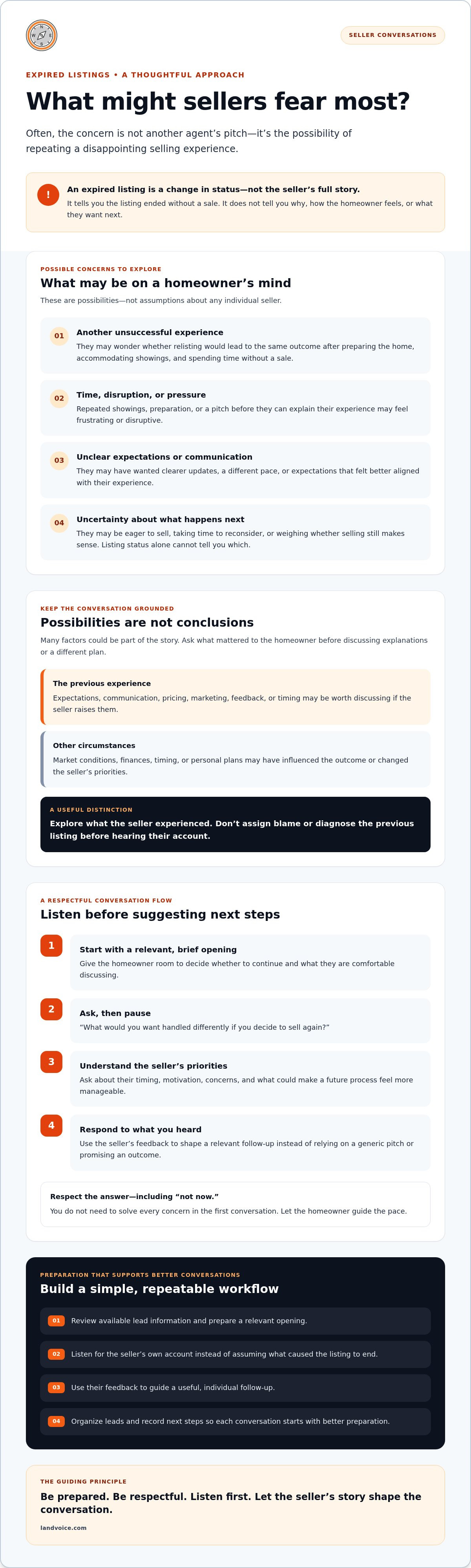
A seller may wonder whether relisting will lead to the same outcome: time spent preparing the home, accommodating showings, and fielding questions without making a sale. If they’re unsure why the previous effort fell short, it may be harder to feel confident about trying again. Don’t rush to explain what went wrong. Ask, “What would you want handled differently if you decide to sell again?” Then let the answer shape the discussion.
This question keeps the focus on the homeowner’s experience rather than your assumptions about the previous agent or plan. They may mention expectations that weren’t met, or they may not be ready to discuss a new approach. Either response gives you direction. Listen for what matters to them before proposing a next step.
Fear of wasted time, pressure, or lost control
Some homeowners may associate selling with repeated showings, disruptive preparation, or conversations that didn’t lead where they hoped. Even well-intended outreach can feel like pressure if it turns into a pitch before they’ve had a chance to explain their experience. Start with a brief, relevant question, then pause. Give the seller room to decide whether to continue and what they’re comfortable discussing.
You don’t need to solve every concern in the first conversation. Your job is to understand the seller’s priorities, not take control of their timeline. Ask whether they’re considering another sale or simply reviewing what happened. If they’re open to talking, find out what would make a future process feel more manageable. If they aren’t, respect that boundary. A calm, responsive approach can build trust without promising a particular result.
Why an Expired Listing Can Leave Sellers Cautious
An expired listing is an outcome, not an explanation. The agreement reached its end without a sale, but that alone doesn’t tell you what the homeowner expected, what happened during the listing, or how they feel about selling now. An expired listing signals a change in status, not the seller’s full story.
Unmet expectations may play a part. A homeowner might have expected more interest, clearer updates, or a different pace. Market conditions could also have influenced the result, while a change in finances, timing, or personal plans may have shifted the seller’s priorities. These are possibilities to explore, not reasons to assign blame. To understand what sellers with expired listings fear most, hear their account before offering an explanation or a new plan.
How the previous listing experience may shape trust
Trust can be affected by whether expectations and communication felt clear to the homeowner. But don’t assume the former agent failed or that the seller is dissatisfied with every part of the experience. Listen for what they say remains unresolved. If they have questions about pricing, marketing, feedback, or timing, understand their perspective before suggesting a different approach.
A quick diagnosis can make you sound as if you’ve already decided what went wrong. Instead, let the homeowner describe what they experienced and what they hoped would happen. Their account gives you the context to discuss possible next steps rather than deliver a ready-made pitch.
Why every expired seller needs an individual conversation
One homeowner may be eager to relist. Another may need time, have changed plans, or be weighing whether selling still makes sense. Listing status can’t tell you which situation applies. Confirm the seller’s timing, motivation, and concerns directly. A respectful conversation makes room for an honest “not now” as well as interest in discussing a future plan.
Market information can help clarify context, but it shouldn’t replace that conversation. The National Association of REALTORS® shares real estate market trends agents can consult when discussing broader conditions. Use relevant information to inform your perspective, then connect it to the homeowner’s circumstances instead of assuming general trends explain their individual outcome.
For a more organized way to identify expired listings for prospecting, explore expired listing leads. Lead information can help you prepare, but the seller’s account should guide what you discuss next.
Seller Concerns vs. Agent Assumptions: What to Listen For
A brief reply, a pause, or uncertainty can catch your attention, but none tells you exactly what a homeowner thinks. What sellers with expired listings fear most varies by person. Treat what you observe as a cue to ask, not proof of a concern. Use open questions to learn what matters before shaping your response.
| Possible concern | Respectful question to check it |
|---|---|
| Trust: the previous experience left questions unanswered. | “What would you want to understand better before considering another plan?” |
| Timing: selling may no longer fit the homeowner’s schedule. | “Has your ideal timing changed since the listing ended?” |
| Effort: preparing for showings or managing the process felt demanding. | “What parts of the selling process would you want to approach differently?” |
| Communication: the seller may want clearer updates or expectations. | “What kind of communication would help you feel informed?” |
| Confidence: the homeowner may be unsure about trying again. | “What would you need to feel more comfortable deciding on a next step?” |
How to separate seller signals from assumptions
Silence might mean the person is busy, not distrustful. A short answer could reflect limited time, uncertainty, or a preference to keep the conversation brief. Don’t fill in the blanks. Ask an open-ended question about the seller’s priorities or preferred timing, then listen without rushing to the next pitch.
Before offering advice, summarize what you heard: “It sounds like timing is the main question, and you’d like to understand your options before deciding. Did I get that right?” This gives the homeowner a chance to correct you and keeps your response tied to something they confirmed, not an assumption based on tone or wording.
What reassurance sounds like without making promises
Reassurance starts with acknowledging the experience, not judging it. You might say, “It sounds like the process didn’t meet your expectations. I appreciate you sharing that.” Avoid blaming the former agent or claiming you can guarantee a better result. Instead, explain a possible next step, such as reviewing what the seller wants to change, and ask whether they’d like to discuss it.
Keep control with the homeowner. Be clear about what you can explore, honest about what you can’t predict, and respectful if they choose not to continue. Build credibility by responding to the concern the seller has actually expressed, not by promising a price, timeline, or sale.
How to Contact Expired-Listing Sellers With Empathy
A thoughtful first conversation starts before you contact the homeowner. Your goal isn’t to diagnose why the listing ended or immediately push for a new agreement. It’s to understand the seller’s situation, explain why you’re reaching out, and find out whether another conversation would be useful. Knowing what sellers with expired listings fear most can help you prepare, but only the homeowner can tell you what matters in their case.
Prepare before contacting the homeowner
Review the available listing information and separate confirmed details from questions. Note relevant facts, such as the property’s former listing status, but don’t assume you know the seller’s motivation, price expectations, or experience with the previous agent. Set a practical goal: learn whether the homeowner is considering a move and what they’d want handled differently. Preparation should make your opening specific, not turn a guess into a claim.
Introduce yourself honestly and explain why you’re reaching out. Keep the purpose direct and brief. For example, refer to the home’s previous listing and ask whether the owner is open to discussing their plans. Don’t imply you have a personal connection or information you don’t have. If the homeowner asks you to end contact, acknowledge the request and stop the conversation.
Listen first, then offer a relevant next step
Ask what the seller wants to happen next and what matters most in that decision. Then listen without interrupting or rushing to counter a concern. If the homeowner says the process felt disruptive, don’t jump straight into a new marketing pitch. Reflect the point back: “It sounds like minimizing disruption would be important if you considered selling again. Have I understood you correctly?”
This check helps confirm you’re responding to what the seller actually said. Once you understand their priority, offer one reasonable next step, such as reviewing what they’d want to change or discussing whether the timing still works. Explain what that conversation would involve, then let the homeowner decide whether to continue. If they’re not interested or ask you to stop, respect their choice rather than pressing for another opportunity.
A consistent process can make preparation more focused. Expired listing leads can support your prospecting workflow, while each homeowner’s responses should guide the conversation and any follow-up. Keep notes on confirmed preferences and agreed next steps, not assumptions. This gives you a clear basis for respectful outreach without promising a sale, price, or timeline.
Build a More Prepared Expired-Listing Prospecting Workflow
Empathy sets the tone, and a consistent workflow helps you carry what you learn into the next interaction. Record what the homeowner has confirmed, the questions they raised, and any follow-up preferences they shared. Keep observations separate from assumptions. If a seller says timing is uncertain, note that rather than labeling them unmotivated. Your notes should help make the next conversation relevant, not lock the homeowner into a conclusion.
Turn seller understanding into a repeatable process
After each conversation, capture the agreed next step and any preference about when or how to follow up. Before reaching out again, review your notes so you don’t repeat a generic opening or ask the seller to explain the same concern twice. If an expired listing is no longer recent, older expired listings may offer another prospecting focus, but confirm the homeowner’s current situation directly.
A simple workflow moves from lead review to a prepared opening, a respectful conversation, and a clear record of what the seller wants next. Lead-generation data can help organize prospecting, but it can’t guarantee that a homeowner will be reached, welcome a conversation, make an appointment, or choose to list. Keep the human conversation at the center.
Evaluate whether Expired Pro fits your prospecting needs
Expired Pro is a resource for agents prospecting expired listings. Consider whether that focus fits your workflow, then review the current product details to understand what’s included. A tool won’t resolve seller concerns or determine the right response for you. Use lead information to prepare, then let the homeowner’s answers guide your next step.
When you understand what sellers with expired listings fear most, you can approach each conversation with greater care. Pair that empathy with organized follow-up, honest expectations, and a repeatable process. The aim is to be prepared, not to promise a particular outcome.
Explore expired-listing prospecting
Turn Thoughtful Outreach Into a Stronger Prospecting Habit
The key to understanding what sellers with expired listings fear most is to ask, not assume. A listing’s expiration doesn’t tell you the homeowner’s full story. Listen for their priorities, confirm what you’ve heard, and let their answers guide any next step. Respectful, relevant conversations build trust without relying on promises about price, timing, or outcomes.
Consistency matters, too. A clear process for preparing, recording confirmed concerns, and following up respectfully helps make each interaction more personal. Expired Pro is designed for expired-listing prospecting. Review whether it fits your workflow, and use lead information to prepare, not predict a result.
Keep showing up prepared, curious, and focused on the homeowner’s perspective. A productive conversation can start with one thoughtful question.
Frequently Asked Questions
What do sellers with expired listings fear most?
There’s no single concern shared by every seller. Some may worry about repeating a disappointing sale process, spending more time preparing for showings, or being pressured into a decision. Others may be unsure why the previous listing didn’t meet expectations. Ask what matters to the homeowner instead of treating an expired listing as proof of a particular fear. Let their answer guide your response.
Why might a seller hesitate after a listing expires?
A seller may hesitate because expectations went unmet, communication felt unclear, or the effort of selling became frustrating. Market conditions or a change in personal plans may also affect their next move. Hesitation doesn’t automatically mean the former agent failed or that the homeowner has stopped wanting to sell. Ask what shaped their experience and what they’re considering now before proposing a new approach.
Are all expired-listing sellers ready to relist?
No. Some homeowners may be interested in relisting soon, while others may need time, have changed plans, or be undecided about selling. A listing’s expiration doesn’t confirm the seller’s current motivation or ideal timing. Ask whether they’re still considering a move and when they might want to revisit the decision. Respect their answer, including “not now,” and avoid treating every expired listing as an immediate opportunity.
How can an agent build trust with an expired-listing seller?
Build trust by being clear about who you are and why you’re reaching out. Acknowledge that the previous experience may have been disappointing without criticizing another professional or assuming what happened. Listen closely, reflect the homeowner’s concern to confirm you understood, and explain any proposed next step plainly. Avoid guarantees about price, timing, or sale outcomes. Let the seller decide whether they want to continue the conversation.
What should an agent ask a homeowner whose listing expired?
Ask open questions that invite the homeowner to explain their priorities. For example: “What would you want handled differently if you sell again?” or “Has your preferred timing changed?” You can also ask what matters most as they consider their options. Listen before offering advice, then briefly summarize what you heard and check that you understood correctly. This keeps your response grounded in the seller’s perspective.
Can an expired listing mean the seller no longer wants to sell?
Yes. A seller may have changed plans, paused their move, or decided that selling no longer fits their circumstances. The listing’s expiration tells you its status changed, not whether the homeowner still intends to sell. Confirm their current plans directly and without pressure. If they aren’t interested in discussing a sale, respect that response instead of assuming they’ll relist or trying to persuade them otherwise.
How should agents follow up with expired-listing sellers?
Follow up based on what the homeowner has actually said. Record confirmed priorities, questions, and any preferences they share about next steps. If they welcome another conversation, refer to that context rather than starting over with a generic pitch. Keep the follow-up clear and relevant. If the seller declines further contact or asks you to stop, respect the request and don’t continue reaching out.
