



by Bruce Keith, on October 29, 2026
Commission breath can undermine trust before you’ve made your case. To avoid commission breath, keep the conversation focused on the client’s needs, goals, and options, not your potential earnings. The phrase describes the impression that you’re prioritizing your commission over the person you’re advising, not a literal breath problem.
You know a client relationship depends on trust, but it can be easy to sound self-interested when compensation comes up. This article explains what commission breath means, how it appears in everyday conversations, and which phrases can keep the focus where it belongs. You’ll find examples of wording that builds confidence without making the interaction feel like a pitch.
Key Takeaways
- Understand what “commission breath” signals in a professional conversation and why it can weaken trust.
- Spot the habits and phrasing that can make your interests seem to come before a client’s needs.
- Learn where mouthwash, mints, and gum can help with literal bad breath, and why they don’t address every cause.
- See how a client-focused conversation can keep attention on the person you’re helping, not your compensation.
- Explore how Expired Pro can support your efforts to connect with homeowners.
What causes commission breath?
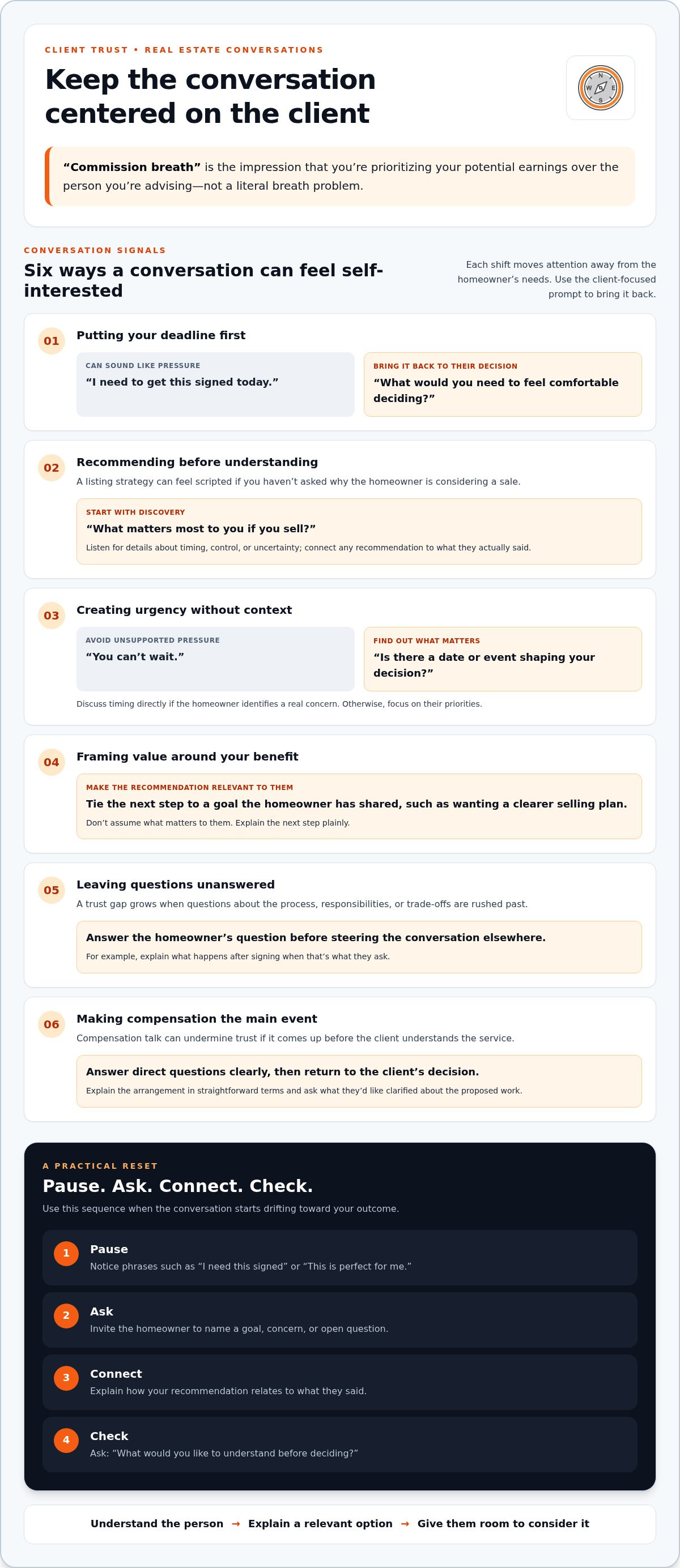
Commission breath is sales slang for sounding more focused on earning a commission than helping a client. It describes an impression, not a literal breath problem. In a real estate conversation, saying “You should list now” can create that impression if you haven’t asked about the homeowner’s plans. The phrase points to a mismatch: your words may center your business outcome while the client is still weighing personal choices.
A self-interest cue is a word or action that makes your benefit unusually visible. Saying “I need to get this signed today” puts your deadline ahead of the homeowner’s needs. The same concern sounds different when you ask about the decision at hand: “What would you need to feel comfortable deciding?” The first version pushes for your preferred outcome. The second invites the homeowner to explain theirs.
Premature pitching means presenting a solution before understanding someone’s situation. Recommending a listing strategy before asking why an owner is considering a sale, for example, can feel scripted. Start with a specific discovery question: “What matters most to you if you sell?” Then listen for details about timing, control, or uncertainty. A relevant recommendation connects to something the homeowner actually said.
Urgency framing stresses immediate action without explaining why it matters to the client. “You can’t wait” may sound like pressure if the homeowner hasn’t described a deadline. Try a grounded question instead: “Is there a date or event shaping your decision?” If the answer reveals a real timing concern, discuss it directly. If not, focus on the homeowner’s priorities rather than manufacturing urgency.
One-sided value framing describes a service in terms of benefits to the professional, not outcomes the client cares about. “This listing would be great for my business” makes your incentive explicit. A stronger explanation addresses the homeowner’s stated goal, such as wanting a clearer selling plan. Don’t assume what matters. Tie each recommendation to something the person shared, and explain the next step plainly.
A trust gap is the distance between what a client needs to understand and what you’ve explained. It can grow when you rush past questions about the process, responsibilities, or possible trade-offs. If a homeowner asks what happens after signing, for instance, answer before steering the conversation back to your pitch. Clear explanations show you’re willing to discuss the work, not just secure agreement.
Compensation talk can create commission breath if it comes up before the client understands the service. Don’t dodge direct questions. Answer clearly, then return to the client’s decision. If someone asks how you’re paid, explain the arrangement in straightforward terms, then ask what they’d like clarified about the proposed work. Transparency gives the homeowner room to assess the relationship without making your earnings the conversation’s main event.
Use this quick reset when you notice the conversation drifting toward your outcome:
- Pause: Notice phrases such as “I need this signed” or “This is perfect for me.”
- Ask: Invite the homeowner to name a goal, concern, or open question.
- Connect: Explain how your recommendation relates to what they said.
- Check: Ask, “What would you like to understand before deciding?”
These steps help you avoid commission breath by keeping the client’s priorities visible in each exchange. If a homeowner says flexibility matters, for example, explore that concern before recommending a path. You can still be direct about your expertise and the work involved. The key is the sequence: understand the person, explain a relevant option, and let the client consider it without pressure.
Do mouthwash, breath mints, or chewing gum actually help bad breath
Mouthwash is a liquid rinse used to freshen breath or support oral cleaning. A minty rinse can temporarily mask odor, while brushing and flossing address food debris and plaque on teeth. Read the label and follow its directions. If you use mouthwash after brushing, check whether the label recommends that timing. A strong flavor alone doesn’t mean the cause of an odor has been removed.
Breath mints are small candies that leave a pleasant taste and scent. A mint before a client meeting can make your breath feel fresher, but it doesn’t clean between teeth or remove material from the tongue. Sugar-free mints avoid adding sugar to the mouth, but check the ingredients. Treat a mint as a temporary freshener, not a substitute for brushing, flossing, or cleaning your tongue.
Chewing gum freshens breath while you chew. Chewing stimulates saliva, which helps keep the mouth moist and clear away some loose debris. Choose sugar-free gum, especially after a meal when brushing isn’t practical. Gum doesn’t reach every surface that brushing and flossing clean, and its flavor fades when you stop chewing. Use it as a short-term aid, not as your entire oral-care routine.
Dry mouth means having less moisture in the mouth than usual. Odor can become more noticeable because saliva normally helps wash away food particles. A long conversation, drinking little water, or breathing through your mouth can leave your mouth feeling dry. Sip water before a meeting and notice whether the dryness returns. Gum can encourage saliva while you chew, whereas a mint mainly adds flavor.
The source of the odor matters more than the product’s flavor. Food trapped between teeth, a coated tongue, and dry mouth each call for different attention. A mint can mask the smell of lunch, for example, while flossing helps remove food lodged between teeth. Brush your teeth, gently clean your tongue, and floss as part of your regular routine. Mouthwash can complement those steps, but shouldn’t replace them.
Use this practical sequence before an appointment or client conversation:
- Clean: Brush your teeth and gently clean your tongue.
- Clear: Floss between teeth to remove trapped food.
- Rinse: Follow mouthwash label directions if you choose to use it.
- Freshen: Use sugar-free gum or a mint when brushing isn’t available.
- Notice: Track whether odor returns after the mint or gum flavor fades.
That final step helps distinguish a passing food odor from a recurring concern. If coffee leaves a noticeable smell after breakfast, water and routine cleaning do more than another mint alone. If the odor persists despite consistent oral care, arrange a dental visit to discuss it. A dentist can examine your teeth and gums and consider oral causes. Avoid trying to cover a recurring issue with repeated rinses or candies.
Keep expectations clear: mouthwash, mints, and gum can freshen breath, but they serve different purposes. Mouthwash rinses, mints add flavor, and gum supports saliva while you chew. None replaces cleaning your teeth and tongue. Before meeting a homeowner, choose the step that fits the situation: clean after eating when possible, sip water if your mouth feels dry, and use gum or a mint for temporary freshness. A confident conversation starts with practical preparation, not a stronger flavor.
Brushing, gently cleaning the tongue, and flossing address debris and plaque. Mouthwash can complement these steps, while sugar-free gum or mints offer temporary freshening. The article provides no basis for stating their cost in the United States.
One additional option is a calming breathing technique to help you settle before speaking. McNamara says to place the tongue on the roof of the mouth and pressurize the air during his calming breathing technique. This is separate from cleaning teeth or freshening breath: it doesn’t replace brushing, flossing, tongue cleaning, or following a mouthwash label. Keep the purpose of each step clear. A rinse, mint, or gum may make the mouth feel fresher temporarily, while cleaning targets debris and plaque, and water or chewing can help with dryness. If odor returns after the flavor fades, return to the basic cleaning routine and consider what may be contributing rather than relying on stronger flavor.
Landvoice: Expired Pro
Landvoice offers Expired Pro, which gives real estate agents data on expired listings to support homeowner outreach. It can be a practical next step when you want to build conversations with homeowners whose listings have expired. Use the information to prepare, then ask respectful questions about the homeowner’s goals and concerns. A relevant conversation keeps the focus on their needs, not your potential commission.
Expired listing outreach still depends on how you communicate. Be clear about why you’re reaching out, listen before recommending a next step, and give the homeowner room to decide whether they want to talk. The data helps you identify whom to contact; your preparation and client-first approach shape the conversation.
Visit Landvoice online to learn more about Expired Pro.
Make Your Next Conversation Count
Trust grows through what you do next: listen closely, explain your recommendation plainly, and give the homeowner space to decide. Learning how to avoid commission breath is less about perfect phrasing than keeping your conduct aligned with the client’s priorities. Make that your standard in every conversation.
If building a consistent outreach pipeline is your next step, Landvoice offers Expired Pro, FSBO Leads, and FRBO Leads for real estate professionals. Choose the lead source that aligns with the homeowners you want to contact, then bring the same client-first approach to each interaction.
Contact Landvoice to discuss your needs
Stay prepared, focus on the person in front of you, and keep building stronger client relationships—whether in direct consultations or through professional referral communities like Network In Action.
Frequently Asked Questions
What are the best ways to prevent commission breath?
Tie each recommendation to a goal the client has actually stated. Before an appointment, note the homeowner’s priority and prepare a question to clarify it. During the discussion, explain how your suggested next step relates to their answer, then invite correction: “Does this address what matters most, or should we adjust?” This simple check can reveal mismatched assumptions before they weaken trust or derail the conversation.
How can I get rid of bad breath quickly before a sales commission meeting?
For a quick refresh, rinse with water after coffee or a strongly flavored meal, then chew sugar-free gum during your trip if brushing isn’t possible. Dispose of the gum before speaking, and keep water nearby if your mouth feels dry. A mint or mouthwash can freshen breath temporarily, but won’t reliably resolve an odor that keeps returning. If persistent bad breath continues despite regular oral care, discuss it with a dentist.
Which foods and drinks make bad breath worse?
Coffee and food, including lunch, can leave a noticeable odor. Trapped food between teeth can also contribute to bad breath.
