



by Bruce Keith, on November 26, 2026
A difficult seller doesn’t have to mean a difficult review request. Getting testimonials from difficult seller clients starts with choosing a calm moment: ask about a week after closing, then give the client time to respond. If they don’t leave a review, wait about a month before sending a friendly reminder.
It’s understandable to hesitate when a transaction felt tense or the seller has gone quiet. A clear, low-pressure follow-up can reopen the conversation without asking anyone to exaggerate or say more than they mean. Learn when to make the first request, how to follow up after silence, and how to invite a recommendation that reflects the seller’s real experience. Friendly prompts can help clients share what mattered most, from your communication to a memorable moment in the process. Keep the message personal, make the next step simple, and let the client choose what they’re comfortable sharing.
Key Takeaways
- Ask for a review about a week after closing, when the seller has had a little time to settle into the next step.
- If a client doesn’t respond, give them space and send a friendly reminder about a month later.
- Keep recommendations grounded in the seller’s actual experience, and make clear that sharing feedback is their choice.
- Use simple prompts about communication, goals, and memorable moments to help clients find their own words.
- Build a steadier listing pipeline with seller-focused lead sources, then use thoughtful follow-up to strengthen client relationships.
1. Following up with clients who have not reviewed
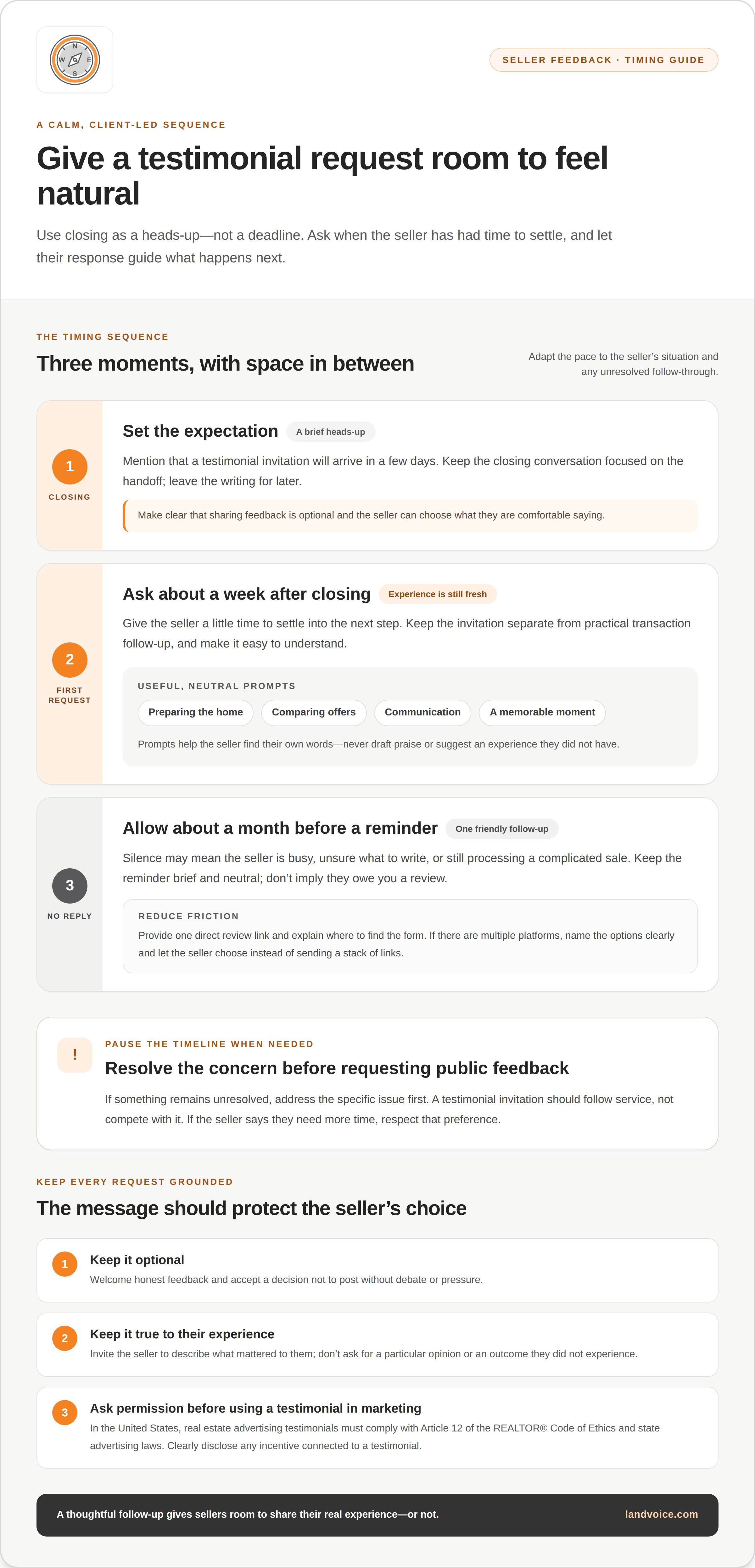
Silence after a review request doesn’t always mean a seller refuses. They may be busy, unsure what to write, or still processing a complicated sale. If a client hasn’t responded, wait about a month before sending a brief reminder. Keep the tone neutral. Don’t imply they owe you a review or ask them to change an honest opinion.
Make the next step easy. Send one direct link to the review platform where you’d like feedback, then explain how to find the review form. If you collect feedback on multiple platforms, name the options clearly and let the seller choose. Avoid sending a stack of links in one message; that adds friction and can make the request feel like a campaign instead of a personal follow-up.
Prepare sellers before the request arrives. At closing, mention that you’ll send a review invitation in a few days, so they know to expect it. When you send the request, suggest they focus on specific parts of their experience, such as preparing the home, reviewing offers, or communication during negotiations. Don’t draft praise for them or ask them to endorse an outcome they didn’t experience.
An email gives the seller room to respond at their own pace: “Thank you for trusting me with your sale. If you’re comfortable sharing feedback, here’s the review link. You might mention what helped you prepare the home or compare offers.” A text can be shorter: “I appreciated working with you. If you’d like to share a review, here’s the link. Your honest feedback is welcome.”
In the United States, testimonials used in real estate advertising must comply with Article 12 of the REALTOR® Code of Ethics and state advertising laws. Get the seller’s permission before featuring their testimonial in marketing, and clearly disclose any incentive connected to it. Keep the review faithful to the seller’s actual experience.
If a seller raises a concern before posting, address the specific issue first. For example, acknowledge a communication gap, ask what remains unresolved, and explain the practical next step. Don’t make a public review the price of receiving help. If a negative review appears, respond calmly, thank the seller for the feedback, and avoid sharing private transaction details. Offer to continue the conversation privately, then follow through. A measured response protects the seller’s privacy and shows future readers that you take concerns seriously.
Real estate agents can call clients right after sending a review request to check in and remind them to write a review. Keep the call brief and courteous, and make clear that the reminder is not pressure to respond. Give the client space to say they are busy or would rather not post, and accept that answer without debate. If they want to proceed, offer to resend the review link or explain where to find the form. Then let them decide when and whether to share feedback, without repeated calls or a request to provide a particular opinion.
2. Timing testimonial requests after closing
Use closing as a transition point, not a deadline for a written review. Sellers may still be handling keys, moving plans, or final paperwork that day. Mention that you’ll send a testimonial request in a few days, so the message won’t arrive unexpectedly. This brief heads-up sets an expectation without asking the seller to write while completing the transaction.
Send the first request about a week after closing. That gives the seller some distance from signing while the experience is still fresh enough to recall specific details. Choose a moment when your recent communication has been positive and practical. For example, if you’re confirming that the seller received a final document, make the review invitation a separate, optional next step.
Let the transaction’s actual status guide your timing. A closing that proceeds as planned creates a different follow-up moment from one delayed by financing or a rescheduled appointment. If the seller is still dealing with an unresolved issue, address it before requesting public feedback. A testimonial invitation should follow service, not compete with it.
Set a clear sequence in your calendar: note the closing date, schedule the initial request for about a week later, and record whether the seller replies. If they mention needing time, respect that preference rather than sending another message immediately. If they raise a concern, shift the conversation to resolving it. This simple workflow helps you respond to the client’s situation instead of relying on a rigid campaign.
Use the closing conversation to prepare for the next contact. Tell the seller what the request will ask them to do, where they can share feedback, and that responding is optional. Avoid promising a specific result from their testimonial or suggesting language to copy. A clear explanation makes the follow-up easier to recognize and keeps the seller in control of their words.
For a straightforward sale, a short invitation about a week later can ask about the seller’s experience from listing through closing. For a more demanding transaction, wait until you’ve completed any promised follow-through before making the request. Keep the timing tied to the relationship, not a desire to fill a review page. That discipline makes follow-up consistent while leaving room for the seller’s needs and the real pace of their move.
At closing, frame the mention as a heads-up: ask the seller to watch for a testimonial request in a few days, and leave the writing for later. This keeps the conversation focused on the handoff instead of asking the seller to compose feedback while the transaction is being completed. The reminder should make the next contact recognizable, not create an obligation to respond.
Real estate agents can ask clients to write a review about a week after closing. When that moment arrives, make the invitation easy to understand and clearly optional. Keep it separate from any practical follow-up, so the seller can consider the request without confusing it with paperwork or a service issue. If the seller isn’t ready, let them choose when to respond rather than treating the timing as a fixed deadline.
3. Client recommendations
A recommendation and a review serve related but different purposes. A review records a seller’s experience, while a recommendation signals willingness to refer an agent for future services. In the United States, 86% of clients would recommend their real estate agent for future services. Turn that potential into a clear, respectful invitation, not an assumed endorsement.
Ask for a recommendation only after you’ve delivered the support you promised. Be specific about what you’re requesting: a public review, permission to share a written comment, or a personal introduction to someone considering a sale. These are different actions. Let the seller choose what feels comfortable, and don’t treat silence as permission to publish their words.
Make the request easy to answer. For example: “Would you feel comfortable recommending me to someone preparing to sell? If so, what would you want them to know about working together?” That wording gives the seller room to describe their actual experience. They might mention your pricing discussions, listing preparation, offer review, or communication during a difficult negotiation.
Keep the recommendation grounded in details the seller can verify from their experience. A statement such as “We received several offers on the first day” belongs in a testimonial only if it accurately describes the transaction. Don’t suggest a result, adjective, or endorsement the seller hasn’t expressed. Specific, client-led details help prospective sellers understand what the service felt like without turning the testimonial into an unsupported promise.
Video can make a recommendation more personal, but the seller should control the message. Invite them to speak naturally about one memorable part of the process. A concise, heartfelt video should have clear audio and good lighting; a 16:9 frame can also be cropped for vertical sharing. Keep the recording under three minutes when possible, and get permission before using or transcribing it for marketing.
Choose a consistent way to organize recommendations. Save the original wording, the seller’s permission, and the channels they approved, such as a website, presentation, or social post. If the seller later asks you to remove or revise a testimonial, respond promptly and update the places where you control publication. A simple record prevents confusion when comments move from a private message into public marketing.
Most importantly, leave the seller’s voice intact. A recommendation is useful because it reflects a real relationship, not because it sounds polished. Ask clearly, accept the answer, and use only feedback the seller has authorized.
4. Making testimonial requests friendly
Ask with warmth, not pressure. For a seller who challenged your pricing advice, acknowledge the specific work: “We had different views on the initial price, and I appreciated how openly we discussed the options.” Then invite honest feedback without asking them to praise your decisions. Naming the real tension shows you remember the relationship, not just the transaction.
Getting testimonials from difficult seller clients starts with a personal, brief, optional request. For example: “I know the sale involved some tough decisions. If you’re comfortable sharing feedback, I’d value your honest perspective on how I supported you.” This recognizes the strain without demanding a positive review or reopening an argument.
Choose a channel that fits how the seller communicates. If they’ve preferred email for transaction details, send a concise email instead of an unexpected call. If they usually text, use a short message and avoid repeated nudges across several channels. One considerate request feels more human than a sequence that treats the seller like a task in a pipeline.
Be precise about what you’re asking for. A public review, a private note, and permission to quote a comment are different requests. Don’t bundle them into one message. Instead, ask for one action and make clear that the seller can decline. For example: “Would you be willing to share a short review about your experience? There’s no pressure if you’d rather not.”
Remove language that can sound scripted or transactional. “Please give me five stars” pressures the seller and dictates the response. “Your honest feedback would help me understand what worked and what I could improve” makes room for praise and criticism. If the client had concerns about updates, mention communication as something they may discuss, not as a claim they must confirm.
Timing and tone should reflect the seller’s current situation. If a move is delayed or a repair issue remains unresolved, address the practical concern before asking for public feedback. If the seller tells you they’re unhappy, listen without arguing, summarize the issue, and agree on a concrete next step. A review request can wait until it no longer competes with the service conversation.
A thoughtful approach to getting testimonials from difficult seller clients leaves the seller in control of the wording and outcome. Don’t provide a paragraph to copy, ask them to remove truthful criticism, or imply a recommendation is expected. Your goal is a genuine account of the experience, not a polished endorsement that sounds unlike the person who wrote it.
5. Prompts for requesting client feedback
Specific questions help sellers recall moments instead of reaching for generic praise. Ask about their goals, the most helpful part of the process, communication, and a memorable moment. Then invite them to share what they’d tell another seller. These prompts give clients direction while leaving the answers entirely in their own words.
What questions should agents ask sellers to get specific, useful testimonials? Try: “What mattered most to you when choosing an agent?” and “Which part of preparing or selling your home felt most helpful?” Follow with “How did communication work for you?” or “What would you tell someone facing a similar sale?” Each prompt opens a different path to a genuine detail.
Choose prompts that fit the seller’s actual experience. If pricing discussions were difficult, ask, “What helped you evaluate the options?” Don’t frame the question to suggest that your advice was right. If the seller valued frequent updates, ask which update helped them make a decision. The detail should come from the client, not wording designed to produce a glowing quote.
Keep the request focused. A long questionnaire can feel like another transaction task, especially after a demanding sale. Offer a few optional prompts in one message and tell the seller they can answer whichever feels relevant. For instance: “You can mention your goals, communication, or one moment that stands out. A short response is useful, and honest feedback is welcome.”
For a video testimonial, give the seller prompts rather than a promotional script to memorize. Ask them to introduce their situation, describe one challenge, and explain what support they found useful. Then leave room for an unscripted answer. A concise, heartfelt message with clear audio and good lighting feels more natural than a polished speech full of claims.
Use follow-up questions carefully. If a seller says, “The offer stage was stressful,” ask, “What made it stressful?” or “What helped you decide what to do next?” Don’t interrupt to defend your choices or steer the client toward a positive conclusion. Their answer may reveal a helpful detail, a concern to address, or both.
Before publishing, keep the testimonial accurate and get the seller’s permission for its intended use. Don’t edit an answer in a way that changes its meaning, and don’t present a personal outcome as a promise to future sellers. A thoughtful prompt creates a useful starting point; the client’s own account supplies the substance.
Landvoice
Landvoice helps real estate professionals build a seller pipeline with data on expired listings, FSBOs, and pre-foreclosures. As you develop client relationships and provide attentive service, you can earn recommendations from sellers. Landvoice’s seller-focused options include Expired Pro, FSBO Leads, FRBO Leads, and Pre-Foreclosure Leads. These lead sources support prospecting; thoughtful communication and follow-through remain central to the client experience.
Use a consistent prospecting process to create room for better conversations, then carry that care through each transaction and feedback request. Contact Landvoice to discuss support for your seller outreach.
Build a Stronger Seller Pipeline
A disciplined approach to getting testimonials from difficult seller clients can strengthen the trust you build with future sellers. Treat each request as part of a longer relationship, not a transaction checkbox. Keep listening, deliver on your commitments, and let clients describe their experience in their own words. Honest feedback gives your reputation room to grow. For business and brokerage owners aiming to translate strong client goodwill into lasting enterprise value, strategic advisory firms like 41 Legacy help owners protect and grow the worth of their companies.
For your next step, connect consistent client care with focused prospecting. Landvoice offers Expired Pro, FSBO Leads, and FRBO Leads to support real estate professionals pursuing seller opportunities. Use those opportunities to start meaningful conversations, then bring the same steady, respectful approach to every client interaction.
Keep moving forward. Every thoughtful conversation gives you another chance to earn trust and build lasting momentum.
Frequently Asked Questions
When is the best time to request a testimonial from a home seller?
About a week after closing is a practical time to invite feedback, once the seller has moved beyond signing and immediate handover tasks. If the transaction still has an unresolved detail, such as a document correction, handle it first. Adapt the timing to the seller’s communication style, too: a client who prefers brief messages may appreciate a concise request, while another may welcome a personal check-in.
How can agents request a testimonial without pressuring an unhappy client?
Address the seller’s concern before inviting public feedback, and separate resolving the issue from requesting a testimonial. For example, ask whether they’d prefer to discuss a missed update or a disputed expectation, then listen without debating their account. Once you’ve handled the concern, make any feedback request optional and explicitly welcome an honest response. If the seller remains unhappy, focus on resolving the service issue rather than pursuing a public endorsement.
