



by Bruce Keith, on November 22, 2026
The first seconds of an owner call can determine whether the conversation continues. A strong script for contacting out-of-state property owners establishes credibility quickly, identifies the property, and gives the owner room to respond.
A distant owner may need a different approach from someone who lives at the property. A rental, vacant home, and inherited property each call for different questions, and a quick “not interested” needn’t leave you stuck. The goal of your opening is to start a respectful conversation, not force a decision.
This guide shows you how to shape your first thirty seconds, confirm ownership and occupancy, and respond to common objections respectfully. Learn to tailor questions to the owner’s situation, ask for a callback when the timing isn’t right, and keep the conversation focused on their plans. Start calmly and directly, listen for the concern behind an objection, and choose your next step based on what the owner tells you.
Key Takeaways
- Explain why you’re calling in a few clear words, then invite the owner to share their plans before suggesting a next step.
- When an owner objects, respond to the concern they raised and offer a relevant follow-up instead of pressing for an immediate decision.
- Use permission-based questions to clarify ownership, occupancy, and whether the property is rented or vacant.
- Adjust your opening to the owner’s local time and the property’s situation, then ask whether they have time to talk or prefer a callback.
- Keep follow-up purposeful across calls, texts, and email, and make each contact add value to the conversation.
Homeowner outreach scripts and owner objections
A useful script gives you a clear reason for calling, then leaves room to hear the owner’s response. Handle objections by identifying the concern, addressing it directly, and agreeing on a relevant next step.
- Open with the owner’s first name and a specific property reference. For example: “Hi, Alex, I’m calling about the property on Oak Street. Is this a good time for a quick question?” A script for contacting out-of-state property owners should sound like a conversation, not a speech. Speak at a steady pace, and don’t assume they’re interested in selling.
-
Identify the Owner’s Objection
Listen for the concern behind the owner’s words before responding. “I’m not selling” signals a different objection from “I’m busy” or “How did you get my number?” Pause, acknowledge the specific point, and ask one brief clarifying question if needed. Don’t argue, repeat your pitch, or treat a clear request to stop contact as an invitation to persuade.
- Answer questions about your reason for calling plainly. If the owner asks where you found their number, explain that public records can contain contact information for property owners, including absentee owners. Then give them a choice: “Would you prefer I explain why I called, or should I let you go?” This respects the distance between you and the property without making it the owner’s problem.
-
Respond and Arrange Follow-Up
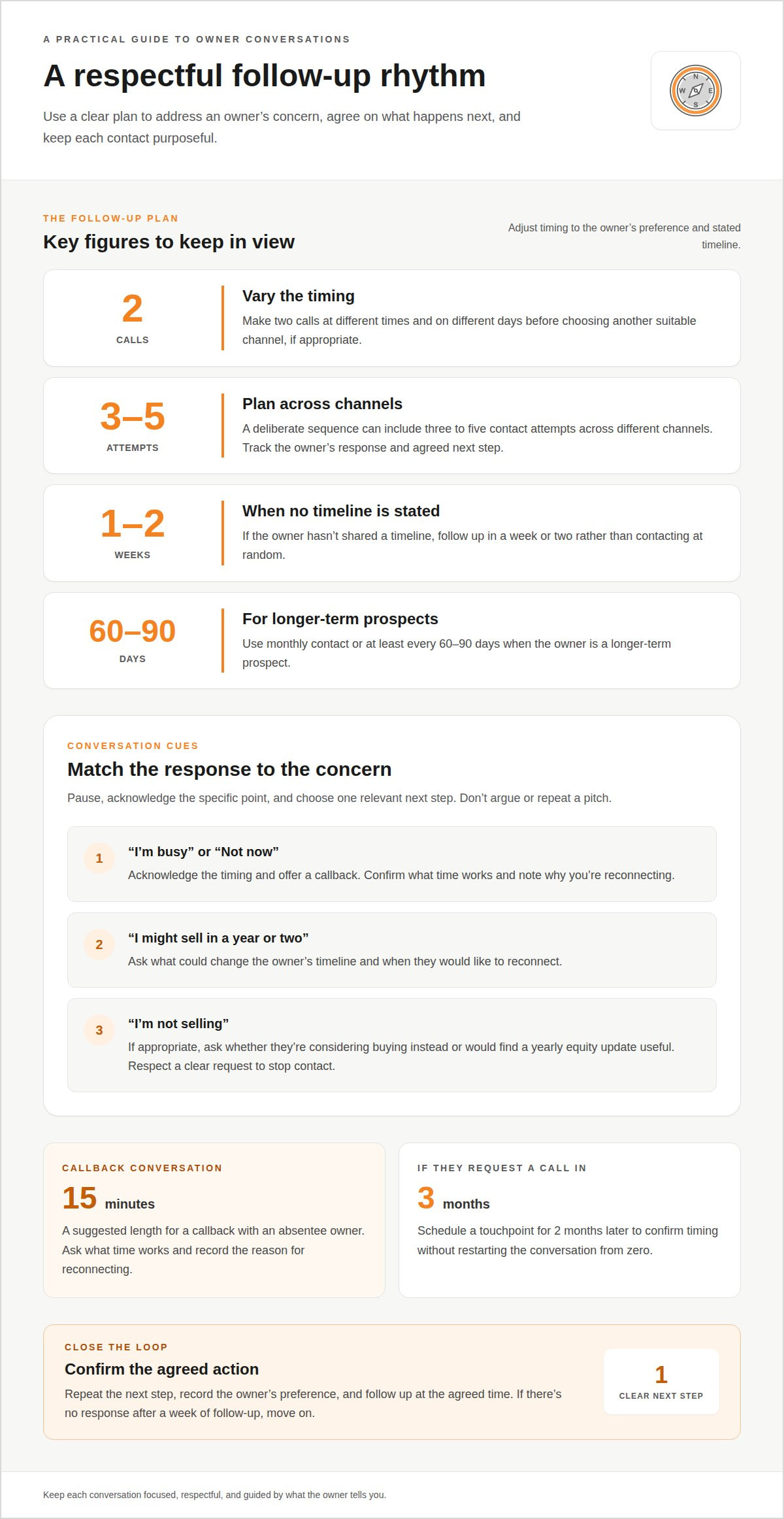
Match your response to the objection, then agree on a specific next step. If the owner says, “Not now,” offer a callback. If they might sell in a year or two, ask what could change that timeline and when they’d like to reconnect. If they aren’t selling, ask whether they’re considering buying instead or would find a yearly equity update useful. Keep the exchange focused and record their preference.
- Use a simple follow-up plan rather than calling at random. Make two calls at different times and on different days, then use another suitable channel if appropriate. A plan can include three to five contact attempts across channels; follow up in a week or two when there’s no stated timeline. For longer-term prospects, use monthly contact or at least every 60-90 days. If there’s no response after a week of follow-up, move on.
- Close every live conversation by confirming the agreed action. A suggested callback conversation with an absentee owner is 15 minutes long, so ask what time works and note the reason for reconnecting. If an owner asks for a call in 3 months, schedule follow-up for 2 months later. That earlier touchpoint gives you a chance to confirm timing without restarting the conversation from zero.
How do you tie the owner's pain point to your solution?
Address the owner’s concern with one relevant next step, then follow up through their preferred channel. Federal and state requirements may apply to calls and texts, depending on the communication and circumstances. For commercial email, CAN-SPAM Act requirements include giving recipients a way to opt out.
- Understand the owner’s specific concern before suggesting help. A landlord who lives far from the property may be weighing rental income against the effort of managing it. Someone handling an estate may have different priorities. Ask one focused question, such as, “What’s the biggest challenge with the property right now?” Then connect their answer to a useful next step in no more than two sentences.
- Ask permission before sending anything: “Would a brief property and neighborhood update be useful?” If the owner agrees, ask for their preferred email address and repeat it back to catch errors. Keep your first email focused on your reason for calling, the property’s street, and the information you promised. For example: “Thanks for speaking with me about the property on Oak Street. I’ll send the neighborhood report we discussed. Is this the best email address?”
- Make each follow-up touch add context. After an unanswered or rejected call, a text within 24 hours can briefly identify you, mention the property, and offer a callback. Keep it relevant: “Hi, Alex. I called about your Oak Street property. Would a short conversation later this week work?” For email, use a clear subject such as “Oak Street property follow-up.” Avoid sending repeated messages that add no new information.
- Follow a deliberate sequence instead of relying on memory. You might plan three to five contact attempts across different channels, including two calls at different times and on different days. If the owner hasn’t shared a timeline, follow up in a week or two. Many real estate deals happen after five or more contact attempts, so track their response and the agreed next step rather than treating one missed call as a final answer.
- Leave a concise voicemail when a call goes unanswered. Identify yourself, name the property’s street, explain why you’re calling, and offer one clear callback option. Send a brief email or text only if it fits the owner’s preferences and your outreach process. For a landlord considering a change, offer a focused discussion of their rental plans rather than a generic sales pitch.
- Close the loop with a specific, relevant next step. If an owner asks for an update, say what you’ll send and when you’ll reconnect, then record that commitment. A consistent contact workflow helps real estate agents keep each conversation moving toward a clear next step.
Federal and state requirements may apply to calls and texts, depending on the communication and circumstances.
Asking about ownership, occupancy, and rental use
Ask whether the person still owns the property, who occupies it, and what they plan to do next. Questions about renting, holding, selling, or buying reveal the owner’s situation without assuming they’re interested in selling.
- Confirm ownership before discussing plans. Ask, “Do you still own the property on Oak Street?” A mailing address that differs from the property address may indicate an absentee owner, but it doesn’t reveal their intentions. Let the owner correct outdated information or explain that someone else now manages the property.
- Clarify occupancy with a neutral question: “Is the property currently rented, vacant, or occupied by someone in your family?” Each answer leads to a different conversation. A rental may involve tenant timing and landlord responsibilities. A vacant home may raise questions about upkeep or future use. Don’t assume occupancy means the owner wants to sell.
- Ask permission before exploring the owner’s plans. Try, “Would you mind sharing what you’re considering for the property?” Then ask whether they plan to hold it, sell it, or buy another property. Their answers can show whether they’re making a decision, maintaining the current arrangement, or weighing options. Listen to their priorities before suggesting a next step.
- Tailor your questions to the property’s circumstances. If the owner says tenants live there, ask whether they expect to keep renting or are considering a change. If the home is vacant or inherited, use a gentle tone and ask whether they plan to rent it, sell it, or keep it in the family. Don’t turn a personal or complicated situation into a rushed sales pitch.
- Explore the timeline without pressing for a commitment. Ask, “Is there a particular time you’d want to make a change, or are you still deciding?” If the owner says “a year or two,” ask what might shift that timing. If they have no plans to sell, respect their answer and ask whether their priorities could change later. Their response helps distinguish a firm decision from an open possibility.
- Let the owner’s answers guide the rest of the conversation. Someone planning to keep a rental may care about managing it from a distance, while someone considering a sale may want to discuss timing and preparation. Ask one follow-up at a time, summarize what you heard, and let the owner correct you. This keeps the conversation accurate and focused on their real estate goals.
Opening a call with an out-of-state property owner
Use your opening to establish credibility, identify the property, and ask permission to continue. Before calling, account for the owner’s local time and keep your first request simple.
-
Review Outreach Rules and Risks
Before calling, account for applicable federal and state requirements. Do Not Call rules can apply to real estate investor outreach; requirements depend on the call and circumstances, and investor status alone doesn’t establish an exemption. Avoid misleading statements, repeated unwanted contact, and assumptions about ownership. Keep accurate records of contact preferences and stop when an owner asks you not to call again.
-
Prepare an Effective Call Script
Build a short call script around your name, role, reason for calling, and the property’s street. For example: “Hi, Jordan, this is Taylor, a real estate agent. I’m calling about your property on Pine Street. Do you have sixty seconds, or would a callback work better?” Use the owner’s first name, speak slowly, and leave room for an answer.
- Check the owner’s time zone before dialing. A call at 9am Pacific may reach an owner in Ohio at an unsuitable local time. Pick a reasonable time for the owner’s location, not yours. If the timing is uncertain, ask whether they’d prefer a callback and record the agreed time. This small preparation step keeps your first impression professional.
- Lead with the property, not a long pitch. Mention its street within the first fifteen seconds, then explain your reason in plain language. For example: “I’m reaching out about your place on Pine Street because I work with owners considering their next move.” Don’t imply you have a buyer, a listing, or a ready offer unless that’s accurate.
- Keep your opening focused on permission and purpose. An absentee-owner call should establish credibility in about ten seconds. Ask whether the owner has sixty seconds to talk or would prefer a callback. If they’re busy, accept their answer and offer a specific follow-up option instead of pushing through your prepared script.
- Make a concise request when speaking with a gatekeeper. Ask to speak with the owner, and save your full introduction for the owner or an authorized proxy. In a telephone pretest, the Federal Reserve Board found that this approach gained more cooperation than reading the introduction to a gatekeeper. If a tenant answers, don’t assume they can discuss the owner’s plans.
- Close your opening with a question that invites a useful response. Ask whether the owner is open to discussing the property, then listen before moving toward a listing conversation. An investor calling about a rental, for example, can ask whether the owner is considering a change or simply reviewing options. Be direct, respectful, and specific.
What is an effective script for contacting out-of-state property owners?
An effective script guides a focused conversation from introduction to callback request. Use the framework below to stay clear, adapt to the owner’s answers, and avoid trying to close a deal on the first call.
- Set one objective before dialing: earn a useful follow-up conversation. A complete absentee-owner call can take 3 to 5 minutes, but the goal isn’t to quote a price or secure a sale immediately. Keep a property note nearby, then listen for the owner’s priorities instead of racing through every prepared line.
- Introduce yourself and your brokerage in a calm, measured voice. Use the owner’s name, then identify the property by its street. For example: “Hi, Morgan, I’m Casey with Northside Realty. I’m calling about your Cedar Street property.” Speak more slowly than you would in everyday conversation.
- Ask permission to explain your reason for reaching out. Try: “Would you have about 30 seconds for me to explain why I called?” If the owner is unavailable, offer a callback rather than continuing your pitch. Keep the first exchange focused on permission, context, and the owner’s choice to continue.
- Explore the owner’s goals with one question at a time. Ask, “Are you considering selling, holding, or making another move with the property?” Then ask permission before each follow-up. Their answer might reveal they’re keeping a rental, considering a sale, or simply reviewing options. Don’t treat willingness to talk as agreement to list.
- Connect your help to what the owner actually says. If they’re weighing a sale, ask whether they’d consider selling if the price and timing made sense. If they’re unsure, ask what information would help them decide. Keep your explanation brief, specific to their situation, and free of promises about the outcome.
- Use the owner’s name again when requesting a next step. For example: “Morgan, would a 10-15 minute phone conversation help us discuss your property goals?” Offer a callback window and confirm the owner’s preferred time. This gives the initial call a clear purpose without turning it into a negotiation.
- Adjust your script when an owner raises a concern or changes the subject. A long pause may call for a direct check-in: “Does that sound relevant to your plans?” If the owner asks for more detail, answer plainly, then return to their priorities. A useful script provides structure, not a rigid speech.
Landvoice
Landvoice helps real estate professionals build a prospecting pipeline with seller lead sources for consistent homeowner outreach. If you’re expanding beyond conversations with out-of-state owners, Expired Pro, FSBO Leads, FRBO Leads, and Pre-Foreclosure Leads give you additional categories to include in your contact strategy.
Turn your script into a repeatable workflow: choose a lead type that fits your goals, prepare relevant questions, and track each owner’s response and follow-up preference. These tools support your prospecting, while your conversations stay focused on each owner’s property and plans.
Ready to strengthen your outreach? Contact Landvoice.
Make Your Next Conversation Count
Make your next call an opportunity to build a more focused prospecting habit. Use a script for contacting out-of-state property owners as a flexible framework, not a speech to recite word for word. Let the owner’s answers shape the conversation, and use each response to guide your next step.
Before your next outreach session, choose the property type you’ll focus on and decide what a meaningful next step looks like. Keep clear notes, follow the owner’s stated preferences, and refine your approach as you learn which questions lead to productive conversations. Consistency gives you a reliable process, even when owners are hard to reach.
Take the next step and strengthen your prospecting approach.
Contact Landvoice to learn more
Show up prepared, stay curious, and make every conversation count.
Frequently Asked Questions
How do you customize the script by property type?
Match your first discovery question to the property’s likely use. For a rental, ask whether the owner expects to keep leasing it. For a vacant home, ask what they’re considering for the property. With an inherited home, acknowledge that family plans may guide the decision. If the property appears distressed, stay respectful and ask what support or information would be useful before discussing a sale.
How do you make a specific, low-pressure callback ask?
Offer a clear purpose and let the owner choose the time. For example: “Would a 10-15 minute conversation help us discuss your plans for the property? Is Tuesday afternoon or Wednesday morning better?” If neither works, ask what timing they prefer. A callback request should explain what you’ll discuss, not imply that the owner has agreed to sell or list the property.
What should a real estate investor say in a first call to an absentee owner?
Identify yourself, explain why you’re calling about the property, and ask permission to continue. For example: “I’m a real estate investor calling about your property on Maple Street. Are you open to discussing your plans for it?” Be accurate. Don’t imply you represent a buyer or have a ready offer unless that’s true. Direct acquisition firms such as LPS Real Estate Group emphasize transparency and flexible options early on, which builds trust right away. Let the owner’s response guide whether you ask another question or end the call.
What are sample texts and emails for contacting out-of-state property owners?
A script for contacting out-of-state property owners should carry naturally into a brief written follow-up. Text example: “Hi, Sam. I’m Taylor, calling about your Maple Street property. Would you prefer a callback?” Email example: “Subject: Maple Street property. Thanks for speaking with me. I’m following up about your plans for the property. If useful, reply with a time to talk.” Personalize the property reference and respect the owner’s preferences.
How can you find and verify contact information for out-of-state property owners?
Public records can help identify an owner and provide contact information. To confirm ownership, compare the property details with county appraiser records before reaching out. For complex situations involving hard-to-find owners or inherited estates, professionals often rely on investigative services such as iigpi.com to locate individuals and verify details. A mailing address that differs from the property address may suggest absentee ownership, but it doesn’t establish the owner’s plans. If records seem inconsistent or another person answers, don’t present uncertain information as fact. Politely ask whether you’ve reached the owner.
How should you handle objections when calling absentee property owners?
Respond to the specific concern, not with a rehearsed rebuttal. If the owner says they’re not selling, you might ask whether they’re considering buying another property or would value an equity update. If they’re busy, offer to reconnect at a time they choose. If they decline further contact, acknowledge the request and end the outreach. A respectful response preserves clarity without pressuring the owner.
How do scripts differ for inherited, vacant, rental, or distressed properties?
Use language that fits the owner’s circumstances. For an inherited property, ask whether the family plans to keep, rent, or sell it. For a vacant home, ask what they’re considering doing with it. For a rental, focus on their plans for tenants and ongoing management. If the owner mentions financial difficulty, slow down, listen carefully, and don’t present a sale as the only solution.
What are best practices for leaving voicemails and following up with property owners?
Keep a voicemail focused on your name, the property, your reason for calling, and a simple callback option. Aim for under 20 seconds so the owner can quickly understand the message. In later follow-up, vary call times and channels, and make each touch relevant to the conversation. Record whether the owner requested a callback, an email, or no further contact, then follow that preference.
