



by Bruce Keith, on October 22, 2026
A strong mindset for calling luxury expired listings starts with listening, not pitching. Many expired-listing sellers relist within 18 months, so a thoughtful first conversation can help you understand what they need next. Lead with empathy, learn why the home didn’t sell, and make the listing appointment the goal when the seller is ready.
A high-value home deserves a more considered conversation than a rushed script. The seller may be disappointed, protective of their privacy, or weighing their options. Stay composed, ask useful questions, and earn permission to continue.
This guide explains the mindset for calling luxury expired listings, how to explore why a property did not sell, and how to follow up without pressuring the seller. It also offers practical guidance for opening the conversation, responding to resistance, and working toward a listing appointment with professionalism and purpose.
Key Takeaways
- Investigate possible pricing, presentation, marketing, and communication gaps before suggesting why the home didn’t sell.
- Make a listing appointment your primary goal; if that isn’t possible, look for a respectful opportunity to see the home.
- If a seller says they aren’t selling and ends the call, consider following up the next day or visiting the home.
- Use scripts to open with empathy and thoughtful questions rather than an immediate pitch about yourself.
- Prepare relevant market context, and draw on your brokerage’s track record when you’re newer to that market or price point.
1. Explaining why a home may not have sold
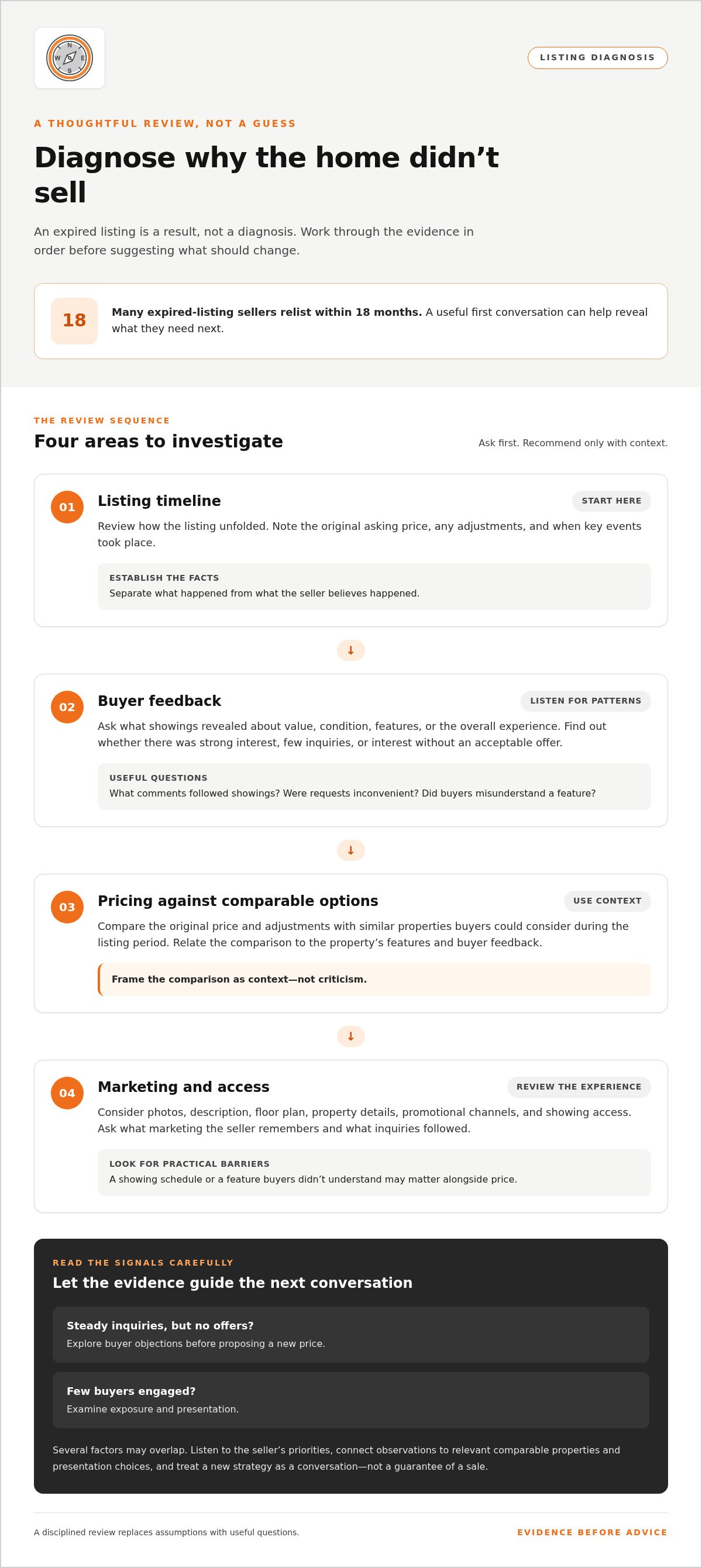
An expired listing is a result, not a diagnosis. The home may have faced a pricing mismatch, limited buyer exposure, presentation issues, or difficult showing access. Several factors may overlap. A seller may have received strong interest but no acceptable offer, or few inquiries despite polished photography. First, distinguish what happened from what the seller believes happened.
Start with the pricing history. Compare the original asking price and any adjustments with similar properties buyers could consider during the listing period. Ask whether showings prompted comments about value, condition, or features. A luxury property with custom finishes may appeal to a specific buyer, but its price still needs to make sense alongside available alternatives. Present the comparison as context, not criticism.
Next, review how buyers encountered the home. Consider the listing photos, description, floor plan, property details, and promotional channels. For example, an opening image that obscures the home’s best feature may weaken the first impression. Ask the seller which marketing efforts they remember and what inquiries followed. This keeps the discussion specific and avoids unsupported claims about the previous campaign.
Agents can discuss pricing, marketing, and relisting strategy by asking what the seller observed, then connecting those answers to relevant comparable properties and presentation choices. Many sellers of expired listings relist within 18 months, so an expired listing may be a pause rather than a final decision. Treat a new strategy as a conversation, not a guarantee of a sale.
Ask about the experience behind the result. Did showing requests arrive at inconvenient times? Did the seller feel informed after each showing? Was there a feature buyers misunderstood, such as a separate guest suite or extensive renovation? These details may reveal practical barriers that a price adjustment alone would not solve. Listen for the seller’s priorities before recommending a change.
Use a simple diagnostic sequence: review the listing timeline, identify buyer feedback, assess pricing against comparable options, then discuss marketing and access. If inquiries were steady but offers were absent, for example, explore buyer objections before proposing a new price. If few buyers engaged, examine exposure and presentation. A disciplined mindset for calling luxury expired listings replaces assumptions with useful questions and a clearer relisting discussion.
2. Repeated calls, visits, and follow-up
Set a clear purpose before each follow-up. Your primary goal is a listing appointment; if that is not possible, aim to get inside the home. Keep those outcomes distinct. A seller who declines an appointment may still welcome a brief property visit or a later conversation. Ask permission, explain why you would reconnect, and respect the answer. This keeps each contact focused rather than turning repeated outreach into identical pitches. Before ending the conversation, ask what timing or next step would be useful to the owner.
If an owner says they are not selling and hangs up, the suggested next steps are to call back the next day or visit the home. Keep that contact calm and specific. You might say, “I understand you’re not planning to sell right now. I’m following up because I’d value hearing what you wanted from the previous sale process.” If you visit, introduce yourself briefly and leave if asked. The aim is to reopen a respectful conversation, not challenge the seller’s decision or demand an explanation.
Track each interaction so your next follow-up reflects what the seller actually said. Note whether they asked for privacy, mentioned a future move, or raised a concern about showings. Use that detail to shape your next contact. If the owner said the timing was difficult, for example, ask whether circumstances have changed before discussing an appointment. If they raised a marketing concern, offer to address it directly. Avoid repeating the same opening after the seller has shared useful context.
Debbie De Grote says a follow-up script she used as a new luxury real estate professional helped her land ten expired listings in one month. The practical lesson is to prepare language that sounds natural, then adapt it to the owner’s response. A brief script could be: “I know the last sale process may not have gone as planned. What would need to be different for you to consider another conversation?” Pause and give the seller room to answer. Suggest a listing appointment only when it fits the conversation. Consistent follow-up means being prepared, relevant, and respectful at every contact.
Keep the contact goals clear in your planning: first seek a listing appointment; if that is not possible, aim to get inside the home. This distinction gives each conversation a practical next step without treating a declined appointment as the end of every possible discussion. Make your request clear, then let the owner’s answer determine whether an appointment is appropriate or access to the home is the next objective.
If the owner says they are not selling and hangs up, the suggested options are to call back the next day or visit the home. Choose your next step carefully, focusing on reopening the conversation rather than pressing for a commitment. Keep the same sequence of goals: seek an appointment first, and pursue access to the home only if an appointment cannot be set.
3. Scripts for contacting expired-listing sellers
Luxury expired-listing calls place particular emphasis on discretion, preparation, and property-specific questions. A seller of a distinctive estate may care as much about privacy, access, or specialized features as price. Avoid a generic pitch. Describe the property accurately, keep your opening measured, and let the owner decide how much to discuss.
Try this opening: “Hello, I’m [Name]. I imagine the sale process took real effort. What would you want handled differently if you decide to revisit a sale?” Then pause. If the seller names a concern, respond to it rather than switching to your résumé. For example: “It sounds like showing access became difficult. Would a conversation about a more controlled schedule be useful?”
Common objections include “We’re not selling,” “We already have an agent,” and “We don’t want more calls.” Acknowledge each without arguing. For “We’re not selling,” say, “Understood. Would you prefer I leave it there, or may I check back if your plans change?” If they already have an agent, respond, “I understand. I won’t interfere with that relationship.” If the owner asks you to stop contacting them, thank them and record the request so future outreach respects it.
In the United States, agents contacting expired-listing sellers must follow applicable Do Not Call requirements and honor requests not to be contacted. Build compliance into your calling workflow: screen records against applicable suppression lists, maintain your own do-not-contact records, and follow relevant telemarketing requirements before placing calls. An expired listing is not permission to ignore a seller’s stated preference.
Scripts work best as flexible prompts, not lines to deliver word for word. Prepare three parts: a concise introduction, a question about the seller’s experience, and a low-pressure next step. If an owner says, “We’re taking a break,” you might reply, “That makes sense. Would a short conversation later be helpful, or would you rather I leave the decision with you?” This gives the homeowner control while opening a clear path to an appointment.
Rehearse the script aloud and remove claims you cannot support. A precise, respectful exchange builds more trust than a polished monologue. For agents seeking to strengthen their overall phone dialogue, resources from sales coaching providers such as Just Go Sell can help refine conversational selling skills. Note the seller’s wording, requested timing, and preferred contact boundaries. That detail makes your next message relevant rather than repetitive, and supports a professional mindset for calling luxury expired listings.
4. Service-centered mindset and patience
Trust grows when you treat the first conversation as a chance to understand, not to close. Ask permission to continue, listen without interrupting, and respond to the seller’s stated concern. If the owner says privacy matters, for example, acknowledge that priority before discussing a next step. A service-centered approach gives the seller room to decide and shows that you have listened.
Luxury sellers may have invested significant time in preparing and presenting a property. Recognize that effort without assuming how they feel. You could say, “You put considerable thought into presenting this home. What part of the process felt most important to get right?” The question invites a useful answer and keeps the focus on the seller’s experience rather than your pitch.
Use evidence carefully. If the owner asks what you would change, explain your reasoning with a relevant example, such as how a listing description could clarify a distinctive feature. Separate observable details from recommendations. “The description mentions the guest suite, but not its separate entrance” is more useful than claiming the previous marketing failed. Precision shows respect and keeps your advice grounded.
Patience means matching your pace to the seller’s readiness. If an owner says they need time, ask what follow-up would be welcome, then honor that preference. If they are not ready to discuss another sale, do not force an appointment into the conversation. A professional mindset for calling luxury expired listings puts a respectful relationship ahead of immediate pressure.
Show value before asking for a commitment. You might offer to discuss how buyers could interpret a property feature, or explain what information you would review before recommending a new approach. Avoid presenting a full strategy before learning the owner’s priorities. A seller focused on discretion, for instance, may need a different conversation from one concerned about inconvenient showings.
Keep your conduct consistent throughout every interaction. If you promise to send a short summary, include only the points discussed, such as the seller’s preferred timing and one requested topic. Do not use the follow-up to add an unsolicited pitch. Reliability in small actions, including accurate notes and a considerate tone, gives the seller a concrete reason to keep talking with you.
Before ending the call, confirm the next step in plain language. Ask whether the seller wants another conversation, a meeting, or no further contact. Then follow that direction. This simple close respects the owner’s choice and gives you a clear, professional action. Trust comes from listening, useful guidance, and follow-through, not repeated pressure to sign.
5. How should agents prepare before calling a luxury home seller whose listing expired?
Prepare before picking up the phone. Review the property’s public listing details, including its description, images, and notable features. Choose one accurate detail to mention, such as a detached guesthouse or distinctive architectural feature. Check the listing timeline and prepare a neutral question about the owner’s experience. This groundwork helps you sound informed without assuming why the home did not sell.
Lead with empathy, not a pitch about yourself. An expired listing may reflect a demanding process, so acknowledge the situation and invite the seller to share. Try: “I saw your home is no longer listed. What would you want to be different if you consider selling again?” Let the owner set the direction. The mindset for calling luxury expired listings starts with curiosity and puts the seller’s priorities ahead of your introduction.
Build a concise property brief before the conversation. Note the home’s standout features, key details from its previous listing, and questions that need the owner’s perspective. Separate visible facts from assumptions. A listing may mention a renovated kitchen, but that does not tell you how buyers responded. Ask, “What feedback did you hear about the kitchen?” rather than claiming the previous presentation missed something.
If you lack personal experience in that market or price point, present your brokerage’s track record. Keep it relevant to the seller’s property, and don’t imply that prior results guarantee a future outcome. You might say, “Our brokerage has experience representing distinctive homes. I can explain how that experience could inform a thoughtful plan.” Then return the conversation to the owner’s goals.
Prepare for more than the opening line. Decide how you will respond if the seller says they are taking a break, asks about your experience, or wants to discuss the previous campaign. If they question your background, answer directly and connect your experience to their stated needs. If you do not know the answer, explain what you can assess and what you would need to learn from them.
Before calling, review your notes and remove any unsupported claims. Keep a brief outline nearby: one property detail, an empathetic opener, a seller-focused question, and a next step guided by the owner. A practical mindset for calling luxury expired listings means being ready to listen, speak accurately, and earn permission for a deeper discussion. Preparation gives you structure without making the call sound rehearsed.
Landvoice: Expired Pro
Landvoice offers Expired Pro for agents building a pipeline of potential listings from expired homes. Use it when you’re ready to put a thoughtful outreach process into action: review each opportunity, prepare a relevant opening, and follow up with care. The service supports your prospecting; your listening, local knowledge, and seller-focused approach shape the conversation. If you’re also expanding into other property types, Landvoice offers FSBO Leads, FRBO Leads, and Pre-Foreclosure Leads. Visit Landvoice to explore Expired Pro and take your next step.
Make Your Next Conversation Count
Turn preparation into a consistent, thoughtful prospecting habit. Approach one seller conversation with curiosity, focusing on the owner’s priorities rather than your preferred pitch. Each exchange can sharpen how you listen, respond, and earn permission for a next step.
A strong mindset for calling luxury expired listings is not about having a perfect line ready. It is about staying composed when the conversation takes an unexpected turn, respecting the seller’s choices, and following through on what you say. Build that discipline one interaction at a time. Confidence grows through deliberate practice and professional consistency.
Explore Landvoice for a tool to support your outreach workflow.
Contact Landvoice to get started
Bring care, preparation, and purpose to your next contact. You’re ready to make it count.
Frequently Asked Questions
What mindset works best when calling luxury expired listings?
Approach the conversation as a chance to understand the seller’s goals, not win an argument. Stay curious, prepared, and respectful of the owner’s control. If a seller is weighing whether to renovate before relisting, for example, ask what outcome matters most before discussing options. This keeps your guidance relevant and helps you respond to the decision in front of them rather than relying on a one-size-fits-all pitch.
What should you say in a luxury expired listing call?
Introduce yourself, acknowledge the home, and ask permission to discuss the seller’s experience. Keep the opening direct: “I’m [Name]. Would you be open to sharing what you’d want to be different next time?” If the seller agrees, ask one follow-up question and listen. This mindset for calling luxury expired listings helps you avoid leading with claims about your success before learning what the owner wants.
How can agents acknowledge why a luxury listing may have failed to sell?
Describe what you can observe, then invite the seller’s perspective rather than assigning blame. You might note that the listing highlighted the property’s architecture, then ask whether buyers commented on that feature. Do not assume price, marketing, or prior representation caused the outcome. Separating visible listing details from the seller’s firsthand experience keeps the discussion factual and helps identify what deserves closer attention.
What questions should agents ask luxury sellers during an expired-listing call?
Ask questions that uncover priorities and practical constraints. Try: “Which part of the sale process took the most effort?” or “What would you want a future agent to understand about the property?” If the seller mentions privacy, ask what contact or showing approach would feel comfortable. A thoughtful mindset for calling luxury expired listings means using the answers to shape a relevant next step, not simply checking questions off a script.
What follow-up cadence works for luxury expired-listing leads?
Let the seller’s response guide the timing, and record any preference clearly. If an owner says they are not selling and hangs up, the suggested next steps are to call back the next day or visit the home. In other conversations, agree on a suitable next contact instead of imposing a fixed schedule. If the seller asks you to stop, respect that request and end further outreach.
